
Which are the latest developments that shape the markets’ risk-reward trajectory? Let’s review some of them:
- War and geopolitics
- Energy (declining stockpiles, rising prices)
- Inflationary pressures from non-energy sources
- Rising long-term yields
- Questions related to current valuations
- AI (rising capex, questionable paybacks and returns, Chinese competition)
- Political polarization and paralysis
- Questions regarding market peak
- Seasonal volatility
- Sapped enthusiasm
On the bond market front, the rising deficits reflect fiscal profligacy, which, when combined with higher capital demands, points to one-way street of rising prices and yield pressures, creating an unstable interest rate environment.
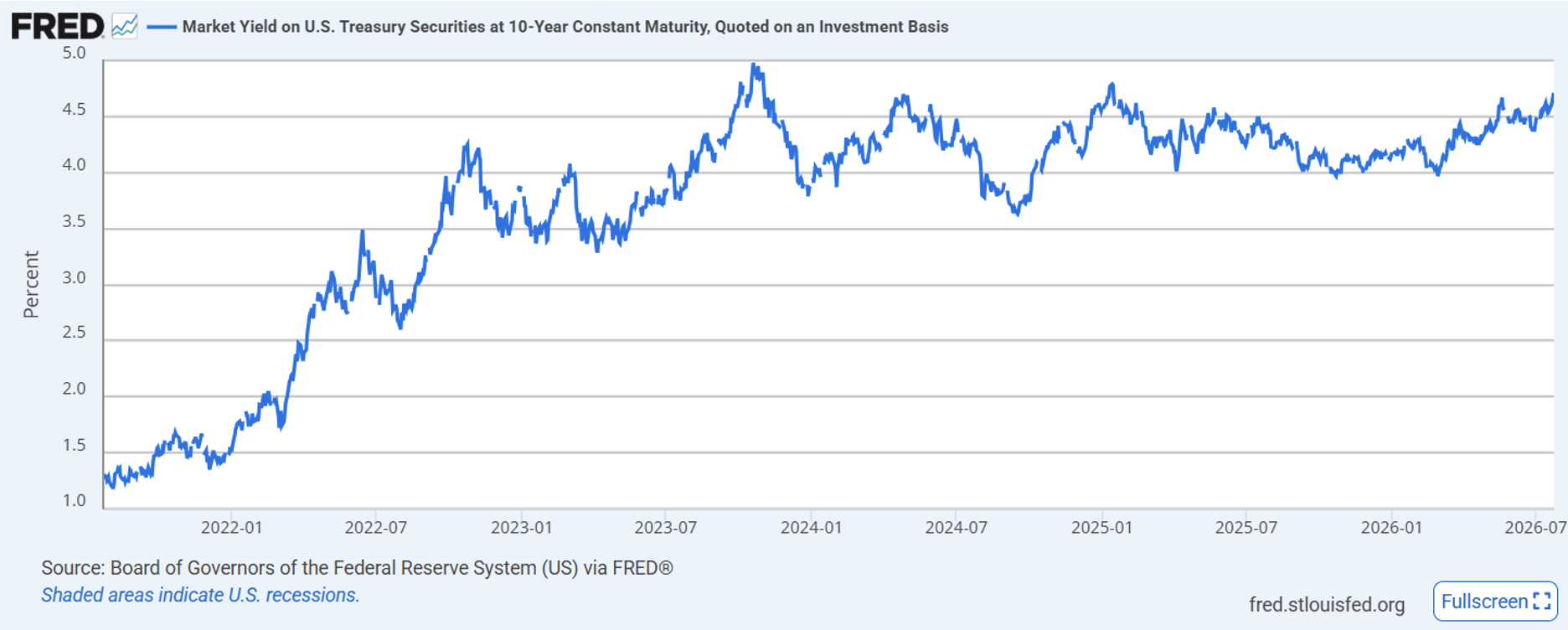
Rising yields will sap investors’ enthusiasm, and even though the economy has pockets of resilience (due to easy money policies, government and corporate spending, as well as wealth effects amplified by generational transfers), the choice of bond investors seems to be a preference to reduce duration risk to less than 24 months. That structural shift, when it is amalgamated with news of negative cash flows from behemoths like Google, creates the stage for a market peak, especially as the August-October season approaches.
Historically speaking, and as we have discussed in the previous two commentaries (see here and here), during the time of the market crash and the depression it generated in the mid-1870s, the euphoria on railroad annual spending had reached the astonishing amount of what is today about $650 billion, which is about the amount spent by the AI behemoths nowadays. The collapse of the Jay Cooke & Co. investment bank dramatically changed the investors’ appetite and their psychology, and of course its ricochet and cascading effects were felt in European markets and around the world, as by 1876 the volume of loans had fallen by about 80%. That set the stage for the bankruptcy of the Ottoman Empire and became the catalyst for a change in the global monetary system.
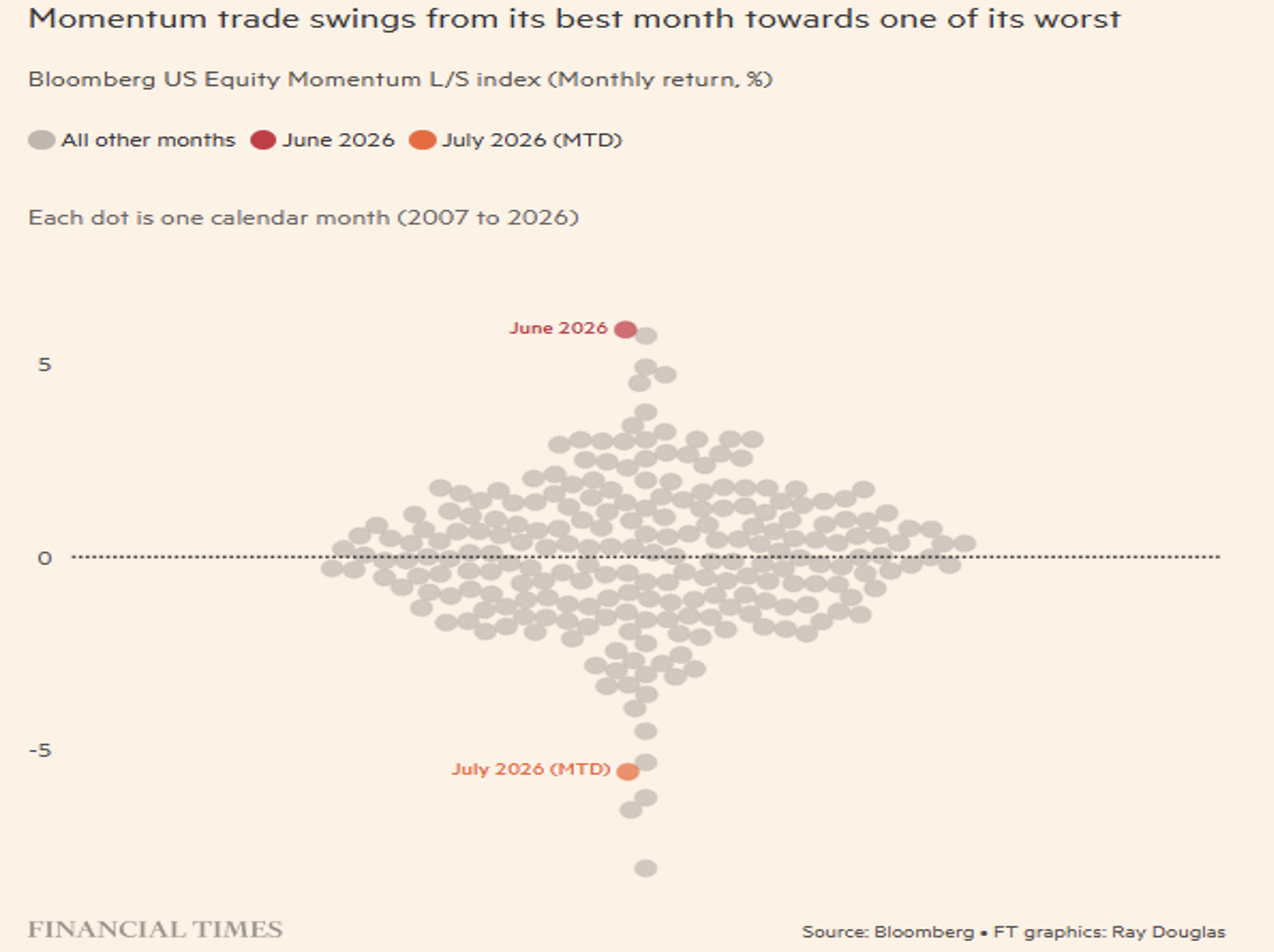
Momentum trades (such as Micron and Sandisk) seem to be stalling, as shown below. The Bloomberg index of momentum strategies has fallen by about 15% in the last month, including the strategy of going long on semiconductor stocks while shorting hyperscalers. Similar trends about tech stocks can be seen in Japan, South Korea, and China too. The pace of AI spending is eviscerating earnings, and that is a significantly negative development. And such a reversal still ignores geopolitical considerations, on top of ignoring tail risks such as Russia using tactical nuclear weapons against Ulraine, now that has been cornered, and Putin seems to be under fire.
These developments are taking place in a geopolitical environment where China undercuts the US in Iran, while a secret Russo-Chinese group is plotting plans to disarm American satellites, as reported by Der Spiegel and the Financial Times. Orbits seem to be becoming battlefields.
The fear is that too much talk and signs of economic and stock market resilience shape a mentality and an environment of complacency where debts are shifted off-the-balance sheet. Nothing shocks that mentality. War? It’s ignored. Rising oil prices? A bump on the road to higher highs. Negative cash flows? Opposing winds raise the stocks’ kites even higher. Fragility? A misconception of imagination.
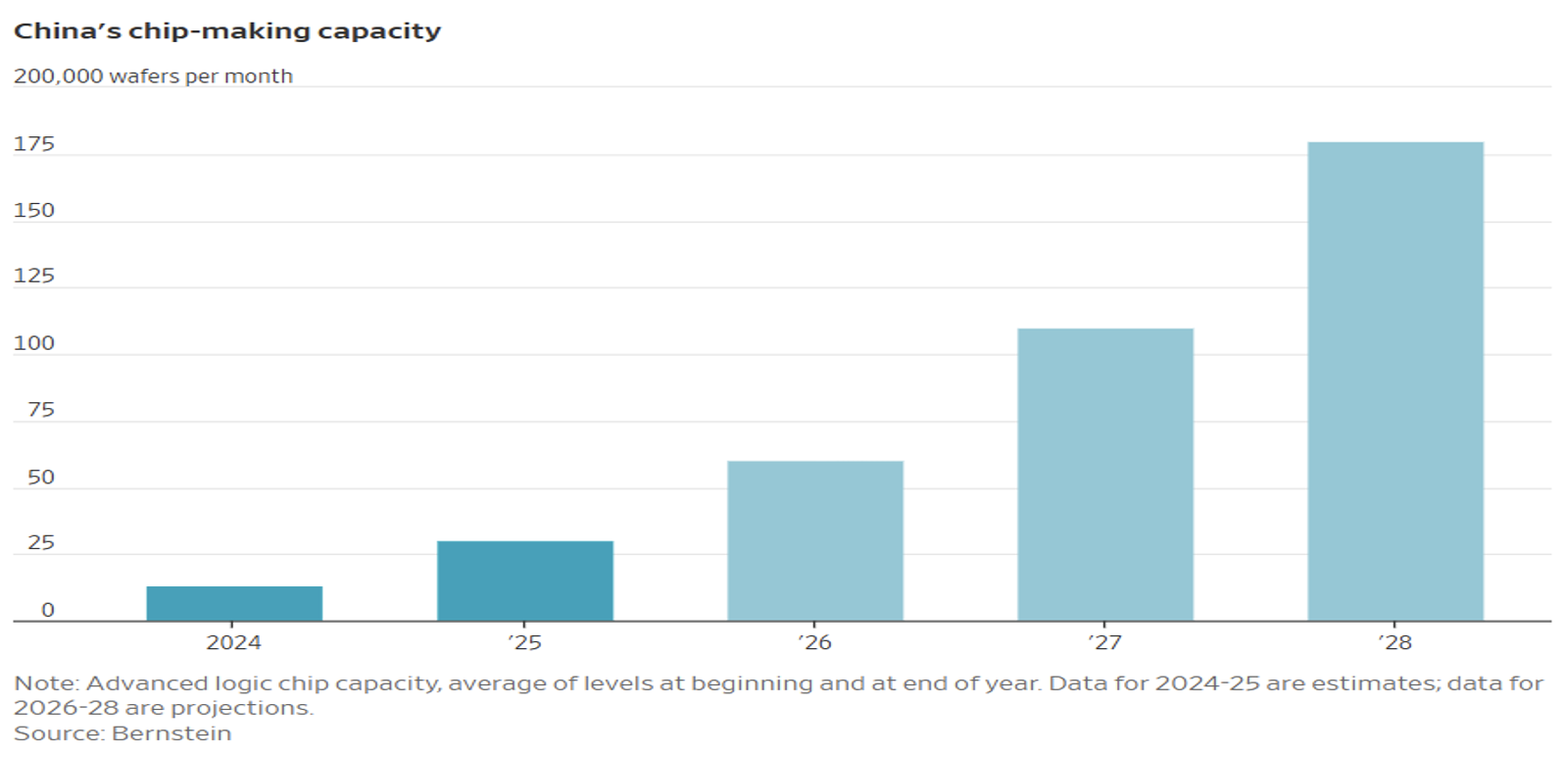
But even if we choose to ignore the risks discussed above, we cannot ignore the fact that China is catching up fast with America’s high-tech and AI capabilities, as shown below.
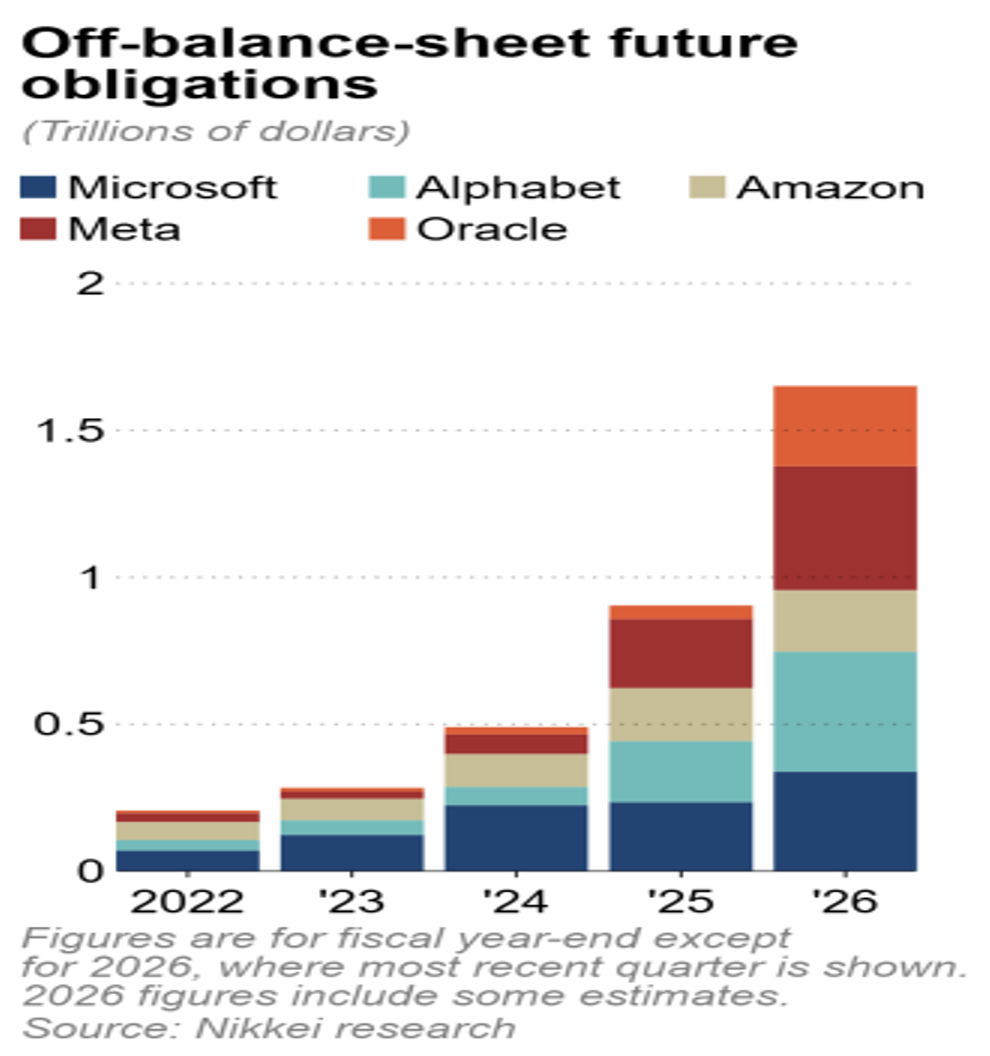
Nikkei Asia completed a report on hidden debts at US tech giants (see below). When I read about it, my mind went to Seneca and the statistical concept of degrees of freedom. Nikkei reported that US behemoths’ hidden debt (Amazon, Meta, Oracle, Google, etc.) swelled eightfold in the last four years to an astounding amount of $1.65 trillion! How could investors assess risks in such an environment when such debt doesn’t appear on their balance sheets? (In the latter they show total debt of $1.35 trillion). Meta’s off-balance-sheet debt is about $420 billion, which represents an amount almost 3 times higher than its recorded debt!
Seneca taught us that such practices betray a self-imposed blindness that leads to loss of freedom of movement, decay, with a danger of enslaving individual and collective future to a reckoning. In his Moral Epistles, he emphasizes that the lack of transparency breeds fracture and a toxic dynamic that also breeds illusions.
