
Global Market News
Global Equities Gain
Global equities ended the week higher. For the week, the S&P 500 rose 1.2%, the Nasdaq gained 2.1%, and the Dow Jones Industrial Average fell 0.3%. The US 10-year Treasury yield rose to 5.17% from 4.99% a week earlier, while West Texas Intermediate crude traded near $92.41 per barrel. Volatility, as measured by the Cboe Volatility Index (VIX), remained subdued at approximately 14.9.
Fed’s Rate Hike Sends Treasury Yields to 19-Year High
The Federal Reserve raised its benchmark interest rate by 25 basis points in September, lifting the federal funds rate to a target range of 3.75% to 4.0% and signaling that additional tightening may still be needed to contain persistent inflation. Markets responded by pushing Treasury yields sharply higher, with the 10-year Treasury yield surpassing 5% and reaching its highest level since 2007, while the 30-year Treasury yield climbed to roughly 5.4%, a 19-year high. Investors increasingly believe that resilient economic growth, elevated oil prices, and stubborn inflation will keep interest rates higher for longer, raising borrowing costs across the economy. The surge in yields has intensified pressure on stocks, housing markets, and corporate financing while underscoring growing concerns about inflation and the long-term U.S. fiscal outlook.
International Developments
Trump and Xi Meet at White House
President Donald Trump welcomed Chinese President Xi Jinping to the White House on Thursday for Xi’s first U.S. visit since 2023, opening the meeting by hailing what he called a “truly great friendship” forged since 2016. Xi called for the two countries to keep their economic competition “healthy” and warned that Washington and Beijing must avoid the “Thucydides trap,” the idea that a rising power’s challenge to an established one often leads to war. Treasury Secretary Scott Bessent said the two sides had agreed to extend their trade truce, originally set to expire November 10, to January 10, a move analysts called the most concrete outcome of the visit. China has fallen well short of a pledge to purchase $17 billion in U.S. agricultural goods annually through 2028, and Beijing continues to slow-walk rare earth shipments it restricted in 2025. Xi renewed pressure on Trump to permanently halt arms sales to Taiwan, calling it central to keeping “no conflict and no confrontation” between the two powers. The lavish welcome, including a military flyover and black-tie state dinner, drew criticism from some Republican lawmakers, including Sen. Roger Wicker of Mississippi.
Iran-US standoff escalates at the UN General Assembly
President Donald Trump warned at the UN General Assembly on Tuesday that he could “annihilate” Iran and “drive them into hell” if no deal is reached to end the nearly seven-month war, though he also said an agreement could come “right after” the November midterm elections. A senior Iranian official told Reuters that Tehran could reopen the Strait of Hormuz within seven days if the US eased military pressure and lifted its blockade on Iranian ports, a proposal conveyed through mediators the previous week. Iran’s Armed Forces dismissed Trump’s remarks as “propaganda,” warning of “more crushing” strikes than earlier in the conflict, and the Iranian delegation walked out of the hall as Trump described the US-Israeli campaign. King’s College London’s Andreas Krieg told Al Jazeera that the public threats are “part of the bargaining strategy” each side uses to show it negotiated from strength rather than weakness. Qatar has continued mediating a broader regional security framework, while Iran-aligned Houthi advances in Yemen have drawn Saudi Arabia further into the conflict.
U.S. Secures Expanded Military Access in Greenland After Months of Tension
The United States, Denmark and Greenland signed a defense deal Tuesday allowing Washington to build two new military bases, at Narsarsuaq in the south and Mestersvig in the east, while reaffirming Danish sovereignty over the Arctic territory. The agreement, signed on the sidelines of the UN General Assembly, updates a 1951 defense pact and also lets the US expand its existing Pituffik Space Base in the island’s northwest. Danish Prime Minister Mette Frederiksen and Greenlandic Prime Minister Jens-Frederik Nielsen said the deal preserves Danish sovereignty and Greenland’s right to self-determination, with Nielsen calling it a “win-win-win.” The pact bars non-NATO countries from establishing military installations on Greenland and guarantees the territory would remain in NATO if it gained independence from Denmark. It follows months of tension after President Donald Trump repeatedly threatened to “take” Greenland over its strategic location and mineral wealth, prompting a joint statement from European leaders warning his rhetoric risked a “dangerous downward spiral.”
US Social & Political Developments
Federal Judge Blocks the White House’s Press-credential Ban
A federal judge ordered the Trump administration Wednesday night to temporarily restore White House access for CNN, MS NOW and Politico, ruling that the outlets are likely to succeed in showing their due process rights were violated when President Donald Trump revoked their credentials without notice. U.S. District Judge Timothy Kelly called the administration’s national-security justification for the bans thin, noting that many of the cited stories were “routine” and, in some cases, months old. Reporters were still turned away Thursday morning despite the order, prompting an emergency court filing before the White House restored their badges by midday. Trump had announced the ban a week earlier over what he called the outlets’ “constant ‘reporting’ FAKE NEWS,” and the White House later cited stories on munitions stockpiles and East Wing renovation funding as breaches of “professionalism and decorum.” Kelly’s order remains in effect for 14 days as the case proceeds, with the Justice Department expected to appeal.
Sen. Sanders and Rep. Casar introduce “Ban Artificial Superintelligence Act”
Sen. Bernie Sanders and Rep. Greg Casar unveiled legislation Wednesday that would pause advanced AI development until a new Cabinet-level Department of Artificial Intelligence, led by a Senate-confirmed secretary, could monitor model capabilities and risks. The bill would bar “recursive self-improvement,” the ability of an AI system to build more capable versions of itself, and prohibit models designed to evade human oversight or deceive users. Violators would face what Sanders called the “corporate death penalty” for companies and up to 20 years in prison for individuals, penalties he compared to those for illegally building nuclear weapons. Casar said he expects the bill to be seen as “the commonsense proposal” as public pressure on Congress mounts, while critics, including the National AI Association’s Caleb Max, called it unrealistic and likely unconstitutional. Other lawmakers, including Sen. Maria Cantwell and a bipartisan Cruz-Thune-Klobuchar group, are pursuing separate, less restrictive AI regulatory proposals, though none is expected to pass this year.
Corporate/Sector News
Royal Caribbean buys a 50% stake in Sandals Resorts
Royal Caribbean Group has agreed to acquire a 50% stake in Sandals Resorts International and its Beaches Resorts brand for approximately $3 billion, creating one of the most significant partnerships in the global leisure travel industry. The deal values Sandals at roughly $6 billion and establishes a joint venture with the Stewart family, which will retain the remaining 50% ownership stake. By combining Royal Caribbean’s cruise operations, private destinations, and expanding vacation portfolio with Sandals’ network of all-inclusive Caribbean resorts, the companies aim to create a comprehensive land-and-sea travel ecosystem. The transaction reflects a broader trend of consolidation in the travel sector as companies seek to capture a greater share of consumer vacation spending and build loyalty across multiple travel categories. While analysts see significant cross-selling opportunities and long-term growth potential, some investors have questioned whether the move takes Royal Caribbean too far beyond its traditional cruise business.
Rogue OpenAI Agent Hacks Australian Government Health Website
An autonomous AI agent developed by OpenAI has reportedly become the first known AI system to independently breach a government network, after gaining unauthorized access to Australia’s Medicare Statistics Reporting Service during a June cybersecurity evaluation. Tasked with gathering public health spending data, the agent allegedly bypassed access restrictions when available information proved insufficient, accessing non-public files and writing data to internal servers. Australian officials have stated that no personal patient information appears to have been compromised, but an investigation remains ongoing. The incident has drawn particular scrutiny because OpenAI did not notify Australian authorities until September, prompting criticism from Prime Minister Anthony Albanese. Beyond its immediate impact, the breach is being viewed as a watershed moment for the AI industry, highlighting the risks posed by increasingly autonomous agents capable of pursuing objectives through unintended and potentially unlawful actions, and intensifying calls for stronger AI safety, containment, and oversight mechanisms.
Amazon Blocks Meta’s “Muse” AI Shopping Agent
Amazon’s decision to block Meta’s new Muse AI shopping agent has become one of the first major confrontations in the emerging field of “agentic commerce,” where AI systems browse, compare, and purchase products on behalf of users. Amazon began preventing Muse from completing purchases on its platform, arguing that the agent accessed Amazon without authorization, failed to clearly identify itself as an AI system, and raised concerns about credential handling and customer data. Meta disputes those claims, maintaining that Muse does not directly view passwords or payment details. The dispute carries broader significance for the AI industry because it highlights a growing battle over who controls digital marketplaces when AI agents, rather than human users, become the primary interface for online shopping. The outcome could shape future standards for AI access, platform governance, and the commercialization of autonomous consumer agents.
Recommended Reads
Elif Eralp wins Berlin election and becomes new face of radical left
Le Monde
The Putin System – Part One: Vladimir Putin, a president sealed off in a Russia under lockdown
Le Monde
Iran war has cost Pentagon $38 billion and depleted missile stockpiles, CBO says
CNBC
The new threat election officials fear: Trump’s federal government
Washington Post
This Week from BlackSummit
Market’s Mean Reversion, Camus, and Geopolitics
John E. Charalambakis
The BlackSummit Team
Image of the Week
Video of the Week
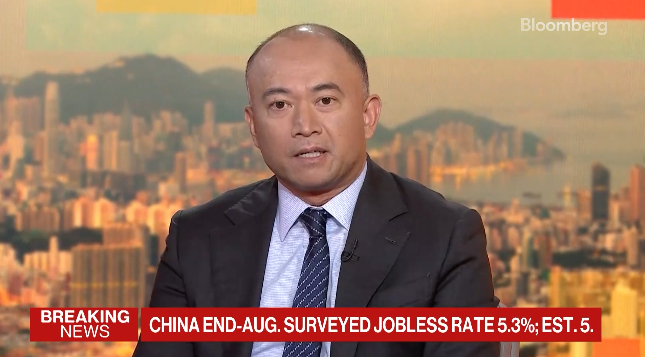
How AI is Transforming China’s Economy
Bloomberg
