
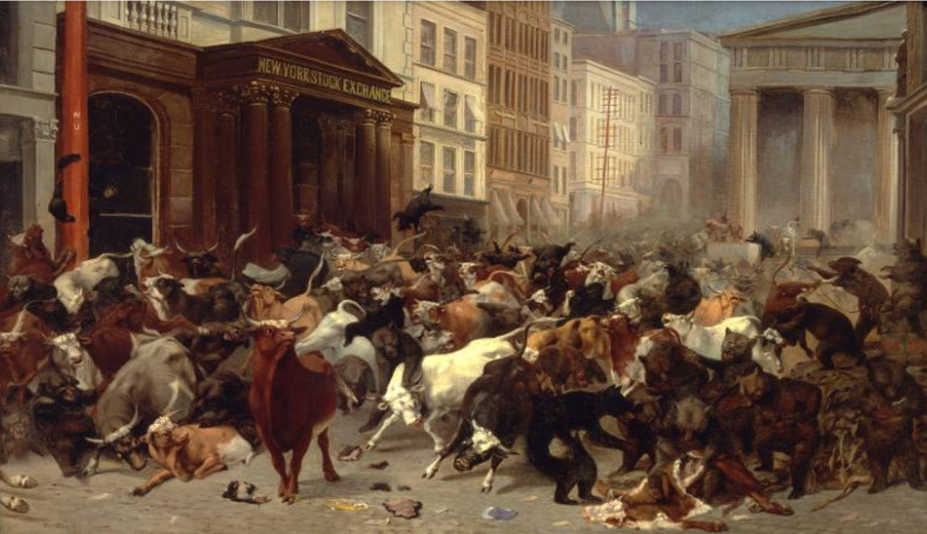
In less than two weeks, we will celebrate America’s 250th anniversary since the Declaration of Independence. There have been several paintings that reflect the spirit of America, and the one that is known as “The Bulls and Bears in the Market” reflects America’s capital dynamism. It was painted in 1879 by William Holbrook Beard.
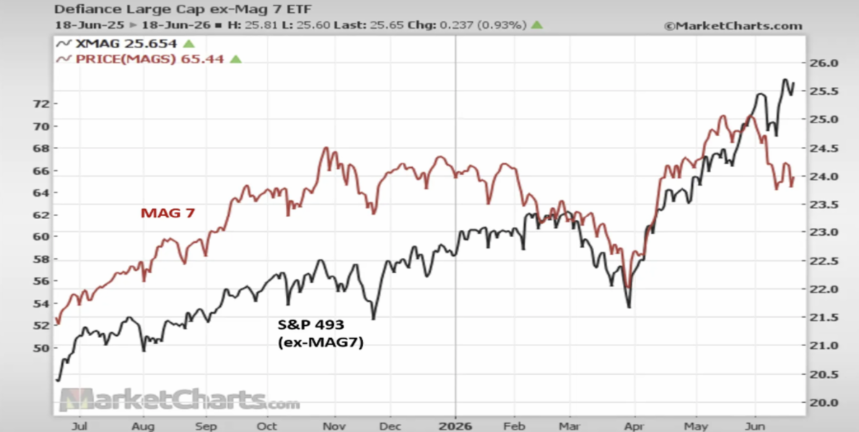
There seems to be a bullish rotation in the markets, and what better way to demonstrate that than by looking at the performance of the Magnificent 7 vs. the rest of the S&P 500 stocks, as shown below. A year ago, the distance between the two was widening. Since early March of this year, the S&P 500 ex-Mag7 stocks have been outperforming the Mag7. This kind of rotation can also be seen in the performance of the equal vs cap weighted S&P 500, where the former has started outperforming the latter. Witness to that rotation is the fact that investors have been allocating less to cash, as well as the rising margin debt accumulated by investors, both of which indicate a bullishness favored by rising profitability.
Beard’s painting remains faithful to his satirical style of using animals to make a point. “The Bulls and Bears in the Market” painting reminds the viewer of the Panic that prevailed in the market in 1873. The chaos that ensued was nothing but the culmination of a mania that had been building up for years. Bulls and bears are fighting for control in the same way that great power rivalry is emerging nowadays in the midst of rising profitability and exuberant projections, while stubbornly high rates and prices may prevail like the mullahs in Iran.
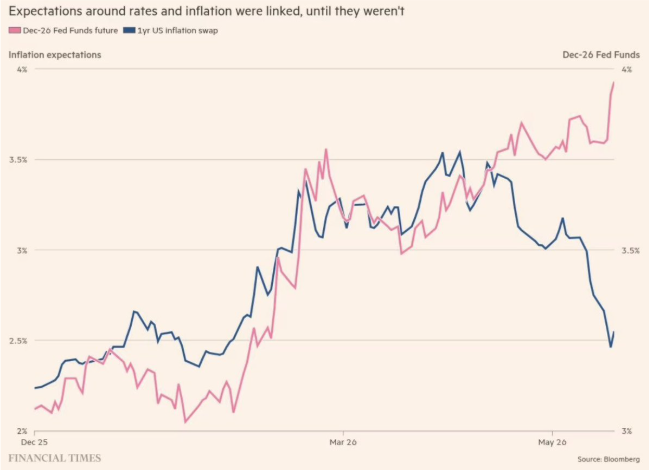
Following the extension of the ceasefire by 60 days to negotiate a peace settlement, oil prices and inflationary expectations have fallen. However, yields remain stubbornly high, and the markets have done a complete reversal from expecting interest rate cuts to now expecting rate increases, as shown below.
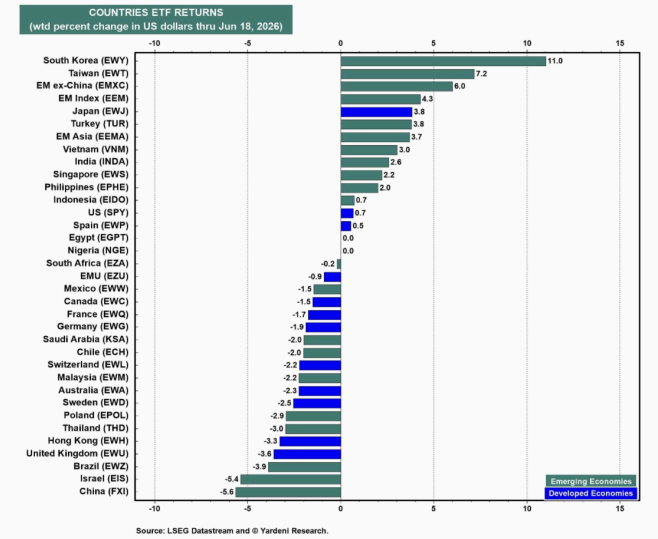
By discounting tomorrow’s profits, stock prices rise, but if the growth in profitability drops (let alone if it doesn’t materialize), then future returns will be below normal. While several analysts warn about those risks, there are just a few who take it a step further, warning that the rotation we see, along with supercharged returns in emerging markets (as shown below), may be indicative of the first stages of mania building, which by default leads to bursting bubbles, even if it may continue for several months.
Which are the signs of that mania? When a company (SpaceX) is losing money, but it is valued over 90 times its annual revenue, we should call it by its name: Mania building where a rising tide initially lifts up all boats, but at the end may risk sinking stocks and the economy. Moreover, the boom seen in options trading – especially for ultra short contracts which by default are not insurance against market drops but rather reflect a casino mentality – is indicative of mania, and the explosion in call options verifies that.
Johann Wolfgang von Goethe was the master of allegory and storytelling. The depth of the human soul is explored in Goethe’s allegories, and during the dinner he had with Beard, an eavesdropper reported that he also praised Beard’s ability to project human vices and follies using animals. “We are both cynical observers of human nature” Goethe said, only for Beard to respond that “human ambition and pride as reflected in Faust, remind us of human vanity, misguided politics, boneheaded policies, and stupid greed.”
“William, what do you make of this graph?” Goethe asked, showing Beard the following figure:
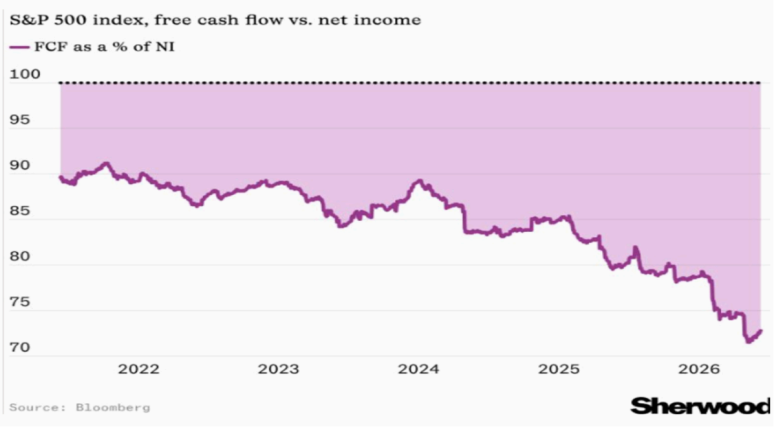
“Seriously? I can only think of painting investors as animals amused in their absurdity,” Beard replied, and added: “Your own work, Johann, in the satirical animal epic ‘Reynard the Fox’, presented the animal kingdom as the ultimate canvas of human hypocrisy. Declining free cash flows is indicative of bullishness that is about to turn into a mania.”
Beard continued: “When I read your writings about Mephistopheles and the eerie, I can only depict the chaotic energy emerging from the fight between bulls and bears, which someone told me is nothing but a projection of how external beasts domesticate chaos inside human minds.”
“You know William, there have been days when I look at your painting ‘Scientists at Work’ and feel that our scientific and technological marvels are missing the spiritual essence of who we were destined to be”, Goethe added.
“Have you seen my existential painting titled ‘For What Was I Created’?”
“Of course, I have, and I vividly remember the melancholy in the bird’s eyes, that dread and agonizing search for meaning”, Goethe replied.
Happy 250th Anniversary, America!
