
Global Market News
Global Equities Make Gains
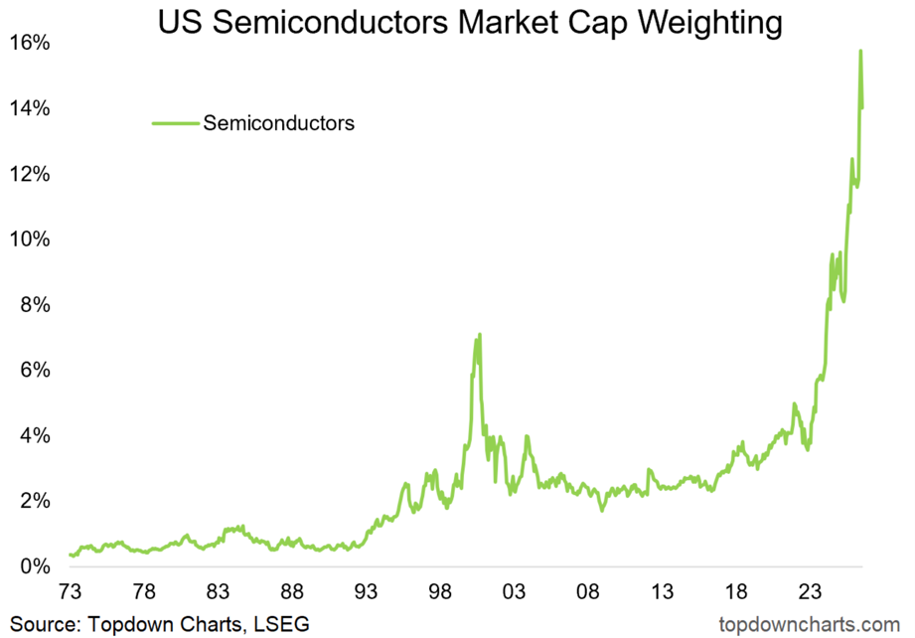
Global equities were broadly higher on the week as of midday Friday, led by a rebound in energy and semiconductor stocks. The yield on the US 10-year Treasury note rose seven basis points to 4.54%, while West Texas Intermediate crude rose $4.50 to $72.00 per barrel as tensions between the US and Iran over the Strait of Hormuz resumed following the breakdown of their ceasefire. Volatility, as measured by the Cboe Volatility Index, edged down to 17.4 from 17.9 last week.
IMF Revises World Economic Outlook
The IMF’s July 2026 World Economic Outlook Update projects global growth at 3.0% in 2026 and 3.4% in 2027, modestly below the 3.5% average of 2024 to 2025, as the negative supply shock from the Middle East war is partially offset by an AI-driven acceleration in the global technology cycle. Global headline inflation is projected to rise from 4.1% in 2025 to 4.7% in 2026, effectively stalling the disinflation trend in place since 2024, before easing to 3.9% in 2027. The outlook varies sharply by country, with economies integrated into the AI technology value chain outperforming and energy importers with limited technology exposure, including many low-income countries, facing the steepest headwinds. The IMF flagged renewed Middle East conflict, trade fragmentation, and a potential correction in AI-driven market valuations as the primary downside risks to its baseline.
International Developments
NATO Summit
The NATO leaders summit in Ankara, Türkiye, this week produced two very different storylines, with President Trump airing a long list of grievances against the alliance even as it quietly advanced the burden-shifting model he has long demanded. Trump renewed threats to pull troops from Europe, called Spain a “terrible partner,” and revived his push to control Greenland, while allies moved forward on $50 billion in new weapons deals and roughly $31 billion for fuel storage and pipeline investment along NATO’s eastern flank. The most consequential shift came on Ukraine, where Trump moved away from earlier criticism of Volodymyr Zelensky and agreed to grant Kyiv a license to produce Patriot interceptor missiles domestically, a move officials believe could meaningfully pressure Russia given Ukraine’s edge in drone and mid-range strike technology. Analysts described the gathering as “a tale of two summits,” pointing to a contrast between Trump’s public remarks and a steadier alliance-level transformation toward greater European responsibility for conventional defense. Separately, Trump drew attention for switching planes mid-trip, flying the first leg home on the original Air Force One rather than the Qatari-gifted jet, which lacks some of the aircraft’s standard defenses, including its more sophisticated air-defense systems and interceptors. Trump said the decision was not security-related, though he noted Iran considered him “number one on their list” for assassination.
Ceasefire Hanging on by a Thread
The fragile US-Iran ceasefire established under the June 18 memorandum of understanding appeared close to collapse this week after Iran struck three commercial tankers near the Strait of Hormuz, including a Qatari LNG vessel and a Saudi crude carrier, prompting the US Treasury to revoke Iran’s waiver to sell oil on the open market. A US official said the move was meant to impose consequences on Tehran, noting that the agreement with Iran is “entirely performance-based.” Brent crude jumped as much as 6 percent to a two-week high above $76 a barrel following the news. Two consecutive nights of US strikes and Iranian retaliation against American bases in Kuwait and Bahrain followed, before Thursday brought a lull, with Qatar working behind the scenes to ease tensions. Shipping traffic through the strait, which had picked up modestly after the original deal, fell again as several vessels turned back or shifted routes, with weekly transits dropping from 262 ships to 211 amid lingering distrust over which shipping lanes Iran considers safe. Trump declared on social media Friday that the ceasefire was over even as he agreed to continue technical talks with Tehran, a message he had previewed earlier in the week at the NATO summit in Turkey. Iran’s Supreme National Security Council warned that any further strikes on its infrastructure would be met with a reciprocal response, extending the threat to Israel as well. Talks slowed further as Iran held funeral rites for former Supreme Leader Ali Khamenei, who was buried Thursday in Mashhad, while his untested son and successor, Mojtaba, has yet to appear publicly since assuming the role.
RSF Encircle el-Obeid in Central Sudan
The Rapid Support Forces has effectively encircled el-Obeid, the capital of North Kordofan state, trapping roughly half a million residents, including about 100,000 people already displaced from other parts of Sudan’s three-year civil war. The city has faced ten consecutive days of drone strikes that have killed at least 45 to 50 civilians, according to UN figures, with June marking the highest monthly total of strikes since the conflict began. UN human rights chief Volker Turk warned that el-Obeid has endured siege-like conditions for 18 months and that the signs point toward another human rights catastrophe, drawing comparisons to el-Fasher, where the RSF carried out mass killings that the UN said bore the hallmarks of genocide after a similarly prolonged siege. Strikes have repeatedly targeted fuel stations, the city’s main electrical substation, and water infrastructure, cutting off power and forcing residents to rely on wells and outside water sources as food prices have surged as much as 300 percent. El-Obeid holds strategic value as a supply corridor linking the RSF-held west to army-controlled eastern Sudan, and analysts note the army has reinforced the city with allied militias, making a full RSF takeover less certain than el-Fasher’s fall was. The RSF has denied plans for a mass atrocity and says it is complying with international law, though a coalition of more than two dozen countries, including the UK, France, and Germany, issued a statement warning of grave risk to civilians in the city.
US Social & Political Developments
Graham Platner Withdrawals from Senate Race in Maine
Graham Platner, the Democratic nominee for Senate in Maine, suspended his campaign this week after Jenny Racicot, a woman who had previously dated him, accused him of raping her in 2021, a claim he called “categorically false.” The accusation, first reported by Politico, marked the culmination of a rapid political collapse for Platner, a retired Marine combat veteran who had won 72 percent of the vote in Maine’s June primary before being dogged by revelations of a Nazi-adjacent tattoo, offensive old Reddit posts, and reports of inappropriate behavior toward women. Prominent Democrats who had previously backed him, including Elizabeth Warren, Ro Khanna, and Ruben Gallego, withdrew their support within hours of the allegation surfacing, and the Senate Democrats’ campaign arm said it would not fund the race if Platner stayed on the ballot. His last major supporter, Bernie Sanders, called for him to step down as well. In a video announcing the suspension, Platner denied guilt and framed the decision as a response to the party establishment cutting off his access to funding and resources rather than an admission of wrongdoing. Maine Democrats face a July 13 deadline for his formal withdrawal and a July 27 deadline to select a replacement through a party convention, with candidates required to submit a 300-word campaign statement and gather at least 500 signatures across eight counties. Several Democrats have already entered the race, including Maine Secretary of State Shenna Bellows, former state senator Troy Jackson, public health expert Nirav Shah, and former congressional candidate Jordan Wood, while Governor Janet Mills’ plans remain unclear. Democrats view the seat as central to their hopes of unseating Republican Senator Susan Collins and reclaiming a Senate majority in November.
Mexican Man Fatally Shot by ICE
Federal immigration agents fatally shot Lorenzo Salgado Araujo, a 52-year-old Mexican immigrant, during a Tuesday traffic stop in Houston, though officials later confirmed he was not the target of the underlying investigation. ICE had been searching for two Guatemalan immigrants believed to be traveling in a similar white van, and agents mistook Araujo’s vehicle for theirs before the encounter escalated and an agent shot him in the abdomen; he died at a hospital hours later. The Department of Homeland Security said Araujo tried to use his vehicle as a weapon against the agent, but no video or other evidence has emerged to support that claim, and the agents involved were not wearing body cameras. Three men who were passengers in the vehicle and were later arrested disputed the agency’s account entirely, telling their lawyer from immigration detention that Araujo never attempted to ram or endanger the officers. Surveillance video broadcast locally shows ICE vehicles tailing and appearing to cut off the van, though it does not definitively resolve the dispute over what happened in the moments before the shooting. Araujo had lived in the US illegally for 35 years but was in the process of obtaining a work permit and was remembered by his family as a hardworking father of three. His death has been ruled a homicide by the Harris County Medical Examiner, and both the Department of Homeland Security’s inspector general and the FBI’s Houston office are investigating, though the FBI’s inquiry is focused on the alleged assault on the federal agent. The killing has drawn public outrage, prompting a vigil at the scene and calls from elected officials and Araujo’s family for an independent investigation.
Corporate/Sector News
IOC Lifts Suspension on Russian Athletes for Next Games
The International Olympic Committee’s Executive Board provisionally lifted its suspension of the Russian Olympic Committee this week, a step toward Russia’s reintegration into international sport ahead of the LA28 Olympic Games. The ROC had been suspended since October 2023 after the IOC found it had recognized regional Olympic councils in Russian-occupied Ukrainian territories, a violation of the Olympic Charter and Ukraine’s territorial integrity, but the committee says it no longer includes those bodies and will not operate there. IOC President Kirsty Coventry said athletes should not be held accountable for their government’s actions, adding that the IOC does not condone the war but does not believe athletes should pay the price for it. Russian athletes returning to competition will still need to meet anti-doping requirements given lingering concerns about the Russian Anti-Doping Agency’s governance, and the IOC has not yet decided whether Russia can display its flag, colors, or anthem at the Games. The decision drew criticism from Ukraine’s foreign ministry, which called it “troubling,” and from athlete advocacy groups who said it lowered the IOC’s own accountability standards. The move is unlikely to produce a full return across all sports, since federations like World Athletics have maintained their own separate bans independent of the IOC’s decision.
Apple vs OpenAI Lawsuit
Apple filed a federal lawsuit in the Northern District of California on Friday accusing OpenAI of systematically stealing trade secrets as it builds out a competing hardware business, setting up a significant legal confrontation between two of the world’s most valuable technology companies. The suit centers on Tang Tan, OpenAI’s chief hardware officer and a 24-year Apple veteran, whom Apple accuses of directing job candidates still employed at Apple to bring physical device components and prototypes to their interviews and of emailing himself confidential supplier information before departing. A second defendant, Chang Liu, is accused of using a former colleague’s Apple-owned laptop to access and download internal technical documents, having coached the colleague on how to evade Apple’s security protocols in the process. Apple also alleges OpenAI approached one of its manufacturing partners and misled that partner into demonstrating Apple’s proprietary metal finishing technique, representing it had Apple’s authorization to do so. The lawsuit reflects a broader and rapid deterioration of what was once a strategic partnership: Apple and OpenAI signed a deal in 2024 to integrate ChatGPT into Siri, but Apple subsequently replaced OpenAI with Google’s Gemini to power its AI products, and OpenAI had itself considered legal action against Apple for allegedly failing to uphold the terms of their original agreement. Apple is seeking an injunction to prevent OpenAI from possessing or using its intellectual property, and the case adds legal complexity to OpenAI’s hardware ambitions at a moment when the company is preparing for a closely watched IPO.
SK Hynix to Debut on NASDAQ July 10th
SK Hynix’s American depositary receipts surged as much as 14% on their Nasdaq debut Friday, opening at $170 against an offering price of $149 and raising $26.5 billion in the largest-ever US listing by a foreign company. The offering, more than seven times oversubscribed, drew cornerstone investors including Baillie Gifford, Coatue Management, and Situational Awareness Partners, and was led by Bank of America, Citigroup, Goldman Sachs, and JPMorgan. SK Hynix, South Korea’s second most valuable company behind Samsung, is the market leader in high-bandwidth memory used in Nvidia’s AI chips, and Chairman Chey Tae-won said demand from customers continues to outpace even the company’s plans to double capacity within five years. The listing arrives amid a broader memory “super cycle” driven by AI infrastructure buildout, with SK Hynix’s Seoul-listed shares up roughly 235% this year despite a recent 25% pullback from their June record high. Proceeds will fund new fabrication capacity and EUV lithography equipment, including a $4 billion advanced packaging plant in Indiana and a $390 billion cluster of fabs in Yongin, South Korea. The debut follows SpaceX’s record-breaking IPO last month and comes as first-half US listing activity hit a record $126.8 billion, with Tokyo-based Kioxia reportedly preparing a similar US offering to follow.
Recommended Reads
There are Only Four Great Powers
Foreign Policy
Saving NATO in the Era of Trump
Financial Times
The Market Rotation from Tech Could be a Longer-Term Adjustment
Barron’s
The Unstoppable Rise of China-Made Cars in Europe
Nikkei Asia
This Week from BlackSummit
The BlackSummit Team
The BlackSummit Team
Image of the Week
Video of the Week
America is Less Divided than You Might Think
The Economist
