
Global Market News
Global Equities Make Gains
Global equities were broadly higher on the week amid reports that the U.S. and Iran are finalizing a memorandum of understanding to end the war. The U.S. 10-year Treasury yield declined six basis points to 4.48%, while West Texas Intermediate crude fell $6.75 to $85 per barrel on expectations that a signed agreement could reopen the Strait of Hormuz. Volatility, as measured by the CBOE Volatility Index, rose modestly to 18.4 from 17.4.
European Central Bank Raises Rates
The European Central Bank raised its benchmark deposit rate to 2.25% on Thursday, a long-signaled move driven by Iran war-induced energy price surges that pushed eurozone inflation above 3%, well above the ECB’s 2% target. The ECB revised its 2026 inflation projection upward to 3.0% while simultaneously cutting its growth forecast to 0.8%, underscoring the stagflationary bind the bloc faces as markets price in at least two additional rate hikes over the coming year.
International Developments
US Renews Strikes on Iran
Iran’s Foreign Ministry confirmed that the US-Iran memorandum of understanding will not be signed on Sunday as previously anticipated, though spokesperson Esmaeil Baghaei did not rule out a signing “in the coming days,” citing the other party’s instability as a reason for caution. The MOU, negotiated through Pakistani mediation and referred to as the Islamabad memorandum, focuses exclusively on ending the war at this stage with nuclear issues deliberately set aside for subsequent negotiations. Pakistan’s Prime Minister Shehbaz Sharif has expressed confidence twice in 24 hours that the parties are close to agreement and has pushed for an electronic signing to lock in commitments before the opportunity passes, with the immediate objective being a 30 to 60-day ceasefire window, reopening of the Strait of Hormuz, release of Iranian frozen assets, and a framework for a 15-year nuclear non-enrichment agreement to be negotiated in follow-on talks. Pakistan’s mediation effort carries the backing of Egypt, Turkey, and Saudi Arabia, with open communication channels to China, positioning Islamabad as the indispensable broker. On parallel fronts, Israel’s military reported striking more than 70 Hezbollah targets in southern Lebanon in a single 24-hour period, killing several fighters and destroying rocket launchers, while Iranian state media confirmed that the funeral of Supreme Leader Ali Khamenei, killed on February 28 at the outset of the US-Israeli campaign, will take place July 4 to 9 with ceremonies in Tehran followed by burial in his birthplace of Mashhad.
Trouble in the UK
Britain faced simultaneous domestic crises this week that together paint a stark picture of a government under severe strain. In Northern Ireland, a brutal stabbing attack in Belfast by a Sudanese refugee sparked two nights of riots, with far-right agitators, including Tommy Robinson and Elon Musk, who shared protest location lists on social media, exploiting the violence to amplify anti-immigrant sentiment and calls for mass deportations. Rioters torched cars and buses, targeted immigrant homes, and forced emergency responders to evacuate immigrant families, with 12 police officers injured and 16 people arrested. British cabinet minister Hilary Benn condemned the violence as “racist thuggery.” Simultaneously, Defense Secretary John Healey resigned on Thursday in a scathing public break with Prime Minister Starmer, accusing him of failing to commit the resources necessary to defend the country against mounting threats from Russia and the broader security environment created by the Iran war. A junior defense minister also quit the same day. Healey’s resignation exposed a fundamental tension at the heart of the government, how to fund a meaningful defense buildup when the economy is stagnating and the tax burden is near historic highs, with his own projections showing UK defense spending reaching only 2.68% of GDP by 2030, well short of Germany’s planned 3.7%. The twin crises add to a growing list of senior departures and have intensified calls within the Labour Party for Starmer to step down, with one lawmaker calling Healey’s exit a “hammer blow” and another describing a leadership challenge as now inevitable.
President Xi Jinping Visits North Korea
Chinese President Xi Jinping completed his first visit to North Korea in seven years on June 9, meeting Kim Jong Un in Pyongyang in what both sides described as the beginning of a “new historical starting point” in bilateral relations, with neither country’s official readout making any mention of denuclearization. The visit came days after Kim’s powerful sister Kim Yo Jong declared North Korea’s nuclear status “irreversible,” and followed Xi’s hosting of Trump in Beijing in May, with analysts framing the Pyongyang trip as Beijing reasserting its role as North Korea’s primary patron amid Russia’s sharply growing influence following Pyongyang’s dispatch of thousands of troops to fight in Ukraine. Defense ministers attended the meetings for the first time, a notable escalation from Xi and Kim’s September 2025 Beijing summit, suggesting deepening security coordination beyond the economic and diplomatic agreements signed then, which produced a 25% increase in bilateral trade last year. China’s tacit acceptance of North Korea’s nuclear status has been building since official Chinese readouts stopped mentioning denuclearization after September 2025. North Korea is now estimated to possess 50 to 60 nuclear warheads with enough fissile material to produce an additional 10 to 20 annually, its economy grew 3.7% in 2024 driven by an estimated $10 billion in Russian revenues, and Kim pledged support for China’s Taiwan position in exchange for Beijing’s effective acquiescence to his nuclear arsenal. Xi’s visit also complicates U.S. military planning by exploiting tensions between Washington and Seoul over burden-sharing responsibilities.
US Social & Political Developments
FIFA World Cup Begins
The athletic, cultural, and geopolitical spectacle that is the FIFA World Cup got underway last week with its inaugural match in Mexico City. Co-hosted by the United States, Canada, and Mexico, this year’s tournament is not only the largest in the event’s history, with 48 teams and 104 matches, but also a major geopolitical and cultural milestone that reflects the complex intersection of sport, diplomacy, and global power. As the first tri-national World Cup, it was initially framed as a symbol of regional cooperation and unity, yet it now unfolds amid strained North American relations over trade, immigration, and border policies, highlighting tensions rather than cohesion. On a global scale, the tournament serves as a platform for soft power and international engagement, bringing together countries with active conflicts or diplomatic disputes, while also exposing friction through visa restrictions, security concerns, and potential political controversies. Furthermore, this edition of the World Cup is unique beyond the broader field and trinational host bid. This year is the first time in the competition’s history that a host nation is involved in an active military conflict with a participating nation. This prompted Iran to move its training camp from its planned seat in Tucson, Arizona, across the US-Mexico border to Tijuana. As the largest sporting event in the world, however, its massive economic and media reach, expected to draw millions of visitors and billions of viewers, illustrates its role as a driver of global commerce and cultural exchange. Overall, the 2026 World Cup illustrates how “the beautiful sport” remains deeply intertwined with geopolitics, functioning both as a stage for cooperation and a microcosm of contemporary global tensions.
President Trump Signs $70B Immigration Bill
President Trump signed the Secure America Act into law on Wednesday, a $70 billion reconciliation package funding Immigration and Customs Enforcement and Customs and Border Protection through the end of his term, capping a months-long legislative standoff that exposed significant fractures within the Republican Party. The House passed the measure 214 to 212 along strict party lines on Tuesday, following a grueling Senate vote-a-rama that produced a 52 to 47 passage, with Democrats unanimously opposed after negotiations over reform guardrails, including warrant requirements and restrictions on masked officers, broke down following the fatal shooting of two American citizens by federal immigration agents in Minneapolis in February. The bill’s path was complicated by two intraparty disputes: Republicans were forced to strip a $1 billion Secret Service allocation tied to Trump’s White House ballroom project after GOP pushback, and a separate standoff over a Justice Department “anti-weaponization” fund, which would have directed taxpayer money to individuals claiming government targeting, was resolved only after acting Attorney General Todd Blanche testified the administration would not pursue the payouts. Republicans bypassed the normal bipartisan appropriations process entirely by using budget reconciliation, a maneuver typically reserved for deficit-related legislation, setting a precedent that critics warn could normalize partisan workarounds for routine agency funding.
Corporate/Sector News
SpaceX Hits the Market
SpaceX debuted on the Nasdaq under the ticker SPCX on June 12, raising $75 billion in the largest initial public offering in history and closing up 19% at $161 per share, valuing the company at $2.1 trillion with shares climbing further in after-hours trading. More than 500 million shares changed hands on the first day, approaching Facebook’s 2012 debut volume, with Citadel Securities reporting record retail IPO auction activity and VandaTrack data showing SpaceX as the most net-bought stock among individual investors on the day at more than 3.5 times the buying volume of Nvidia. Musk, who rang the opening bell from Texas, described the IPO as funding for a “significant growth phase” including plans to deploy over 100,000 satellites and build AI data centers in space, with the company’s only currently profitable division being Starlink. The listing minted Musk as the world’s first trillionaire based on his combined stakes in SpaceX and Tesla, drawing immediate political criticism from Senator Elizabeth Warren and New York City Mayor Zohran Mamdani. SpaceX has accumulated $41.3 billion in total losses since its 2002 founding, and CFRA Research analyst Keith Snyder assigned the stock a sell rating with a 12-month price target of $115, well below the $135 IPO price, arguing the valuations required to justify current pricing are “borderline comical.” Former Nasdaq chief Robert Greifeld predicted the listing opens the IPO window for Anthropic and OpenAI to follow later this year.
BYD Targets Toyota’s Global Crown
BYD Chairman Wang Chuanfu declared at the company’s annual general meeting that BYD will surpass Toyota, Ford, and General Motors to become the world’s largest automaker by scale within five years, citing export volumes already on track to exceed the company’s 1.6 million vehicle target for 2026 and a recent milestone of surpassing Ford in global sales for the first time. Wang pointed to a fleet of over three million intelligent vehicles generating 200 million kilometers of driving data daily and Level 3 and Level 4 autonomous features ready for deployment pending regulatory approval as further competitive advantages. On charging infrastructure, BYD launched its Flash Charging network on March 5 and reached 5,715 stations across more than 300 Chinese cities within two months, deploying chargers delivering up to 1,500 kW, three times the output of Tesla’s latest V4 Superchargers, enabling a 10% to 70% charge in five minutes on compatible vehicles. BYD is targeting 20,000 Chinese stations by year-end through a Sinopec partnership and opened its first overseas station in Germany in early June, with 3,000 European stations planned by end of 2027. At current deployment rates analysts project BYD’s network could match Tesla’s global station count between 2029 and 2030, though Tesla retains advantages in route data, reliability, and NACS standard adoption. U.S. consumers are effectively excluded from BYD’s charging expansion due to 100% tariffs, a connected vehicle software ban, and unresolved trade restrictions.
Volkswagen Accelerates Restructure: 19,000 Jobs Cut by Year-End
Volkswagen CEO Oliver Blume is set to tell investors at the company’s June 18 AGM that 19,000 jobs will be eliminated by end of 2026, with a binding target of 28,000 reductions at the core VW brand by 2030 and 50,000 group-wide across Germany including Audi, Porsche, and software subsidiary Cariad. The accelerating cuts reflect a severe deterioration in financial performance: operating profit fell 53% to €8.9 billion in 2025, net profit dropped 44% to €6.9 billion, and the group’s operating margin compressed to 2.8%, its worst since the Diesel gate crisis, with Blume targeting a restoration to 8-10% that the current restructuring alone will not achieve. A separate report indicates VW executives presented a plan for 20% cost reductions by 2028 at an internal leadership meeting, with plant closures not ruled out despite a 2024 union agreement explicitly prohibiting them. Production at the Dresden Transparent Factory has already been wound down and the Osnabrück plant, whose 2,300 workers face the end of T-Roc production in mid-2027, is in talks to be repurposed supplying components for Israel’s Iron Dome defense system, drawing criticism from IG Metall. The pressures driving the restructuring show no signs of easing: U.S. tariffs have cost the group billions, BYD and Geely have both overtaken Volkswagen in its critical Chinese market, and Chinese automakers are accelerating their penetration of European markets where VW’s EU trade deficit with China grew 18% in 2025 to approximately €359 billion annually.
Recommended Reads
The Key Forces Now Shaping Markets and Geopolitics
AI Won’t Stave off the Debt Disaster
Time for Nuclear Recycling? Prospects and Implications During a Global Nuclear Energy Renewal
This Week from BlackSummit
The Atrophy of a Pugnacious Shellacking
John E. Charalambakis
The BlackSummit Team
Image of the Week
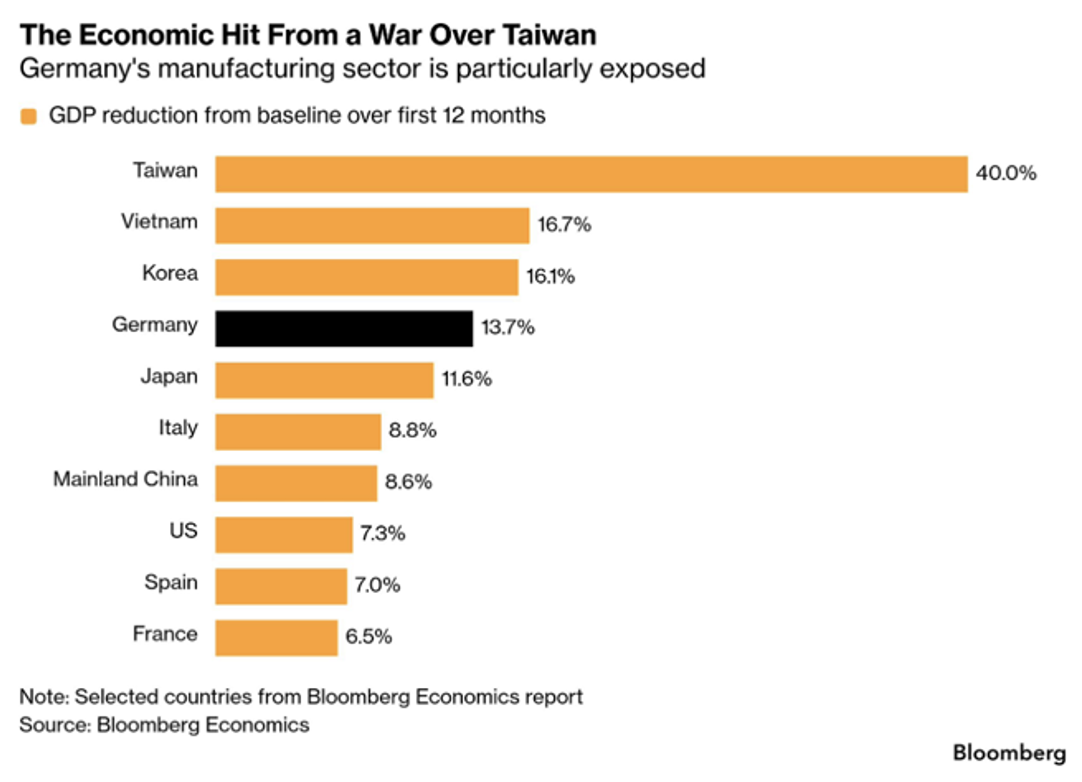
Video of the Week
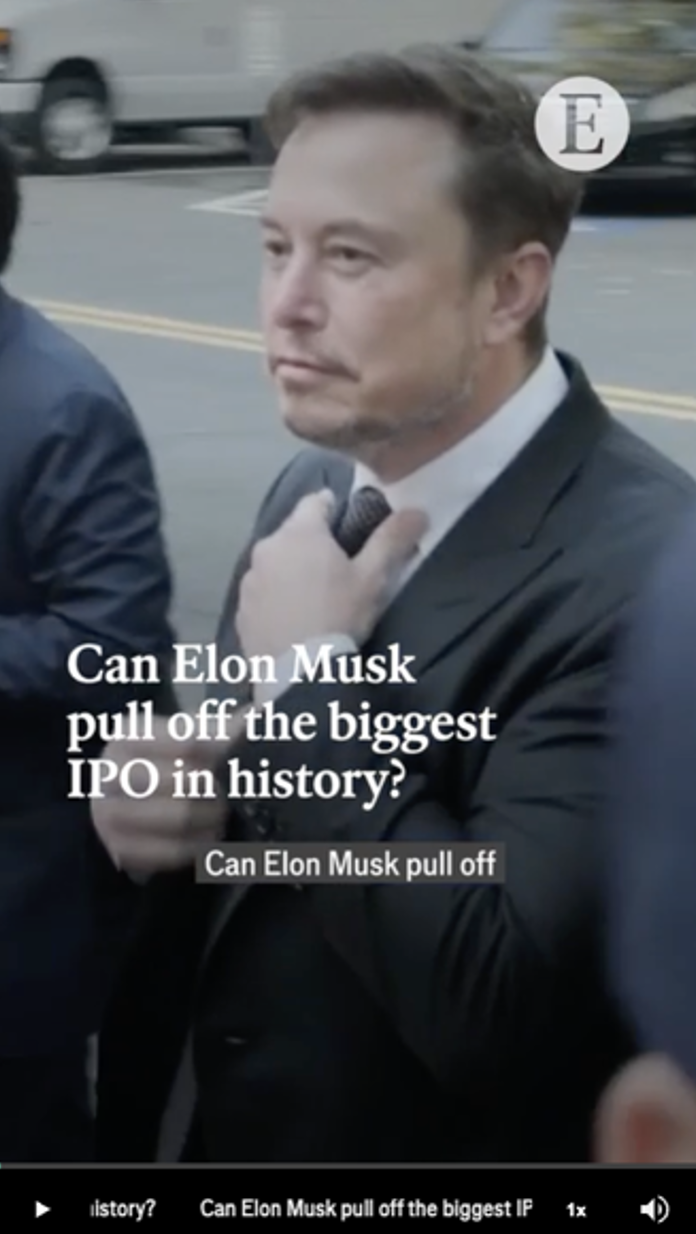
Can Elon Musk Pull Off the Biggest IPO in History?
The Economist
