Whether we turn left or right, we see conflicts and tensions everywhere (Middle East, Ukraine, trade, rising yields, etc.). However, the global economy seems to be handling the pressures well and has taken it all in stride. Setbacks are corrected, and the tug of war between negative supply shocks and rising equities seems to be mitigated and offset by rising demand, profitability, exports, and spending. Most certainly, the locomotive of AI spending is propelling those tailwinds.
Voltaire’s satirical masterpiece titled Candide includes the character of Dr. Pangloss who embodies unshakable optimism. The harsh realities that surround Pangloss are easily overcome and are in stark contrast to his philosophy of an unparalleled optimism of a perfectly ordered universe. (Of course, Voltaire, with his amazing satirical ability, criticizes in this manner the Enlightenment thinkers who thought that reason and science could address all the problems of the world). The Panglossian optimism that is derived from that satire might be a fit to today’s optimism surrounding AI.
A major issue that has been surfacing in the last few weeks has to do with the rising yields on long-term bonds around the world, as shown below and especially in the second graph.
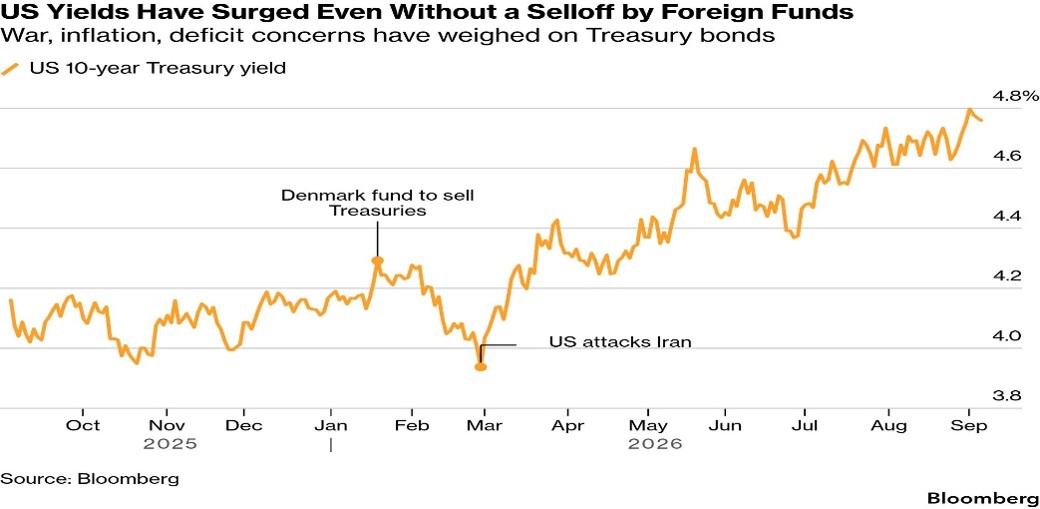
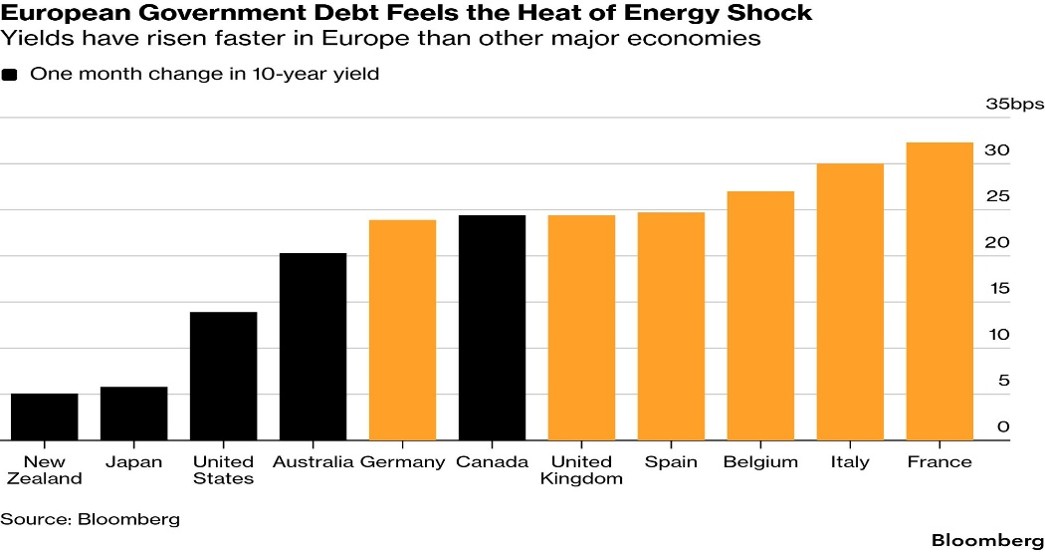
We can identify five reasons for such rising yields, namely: Uncontrollable national debts, inflationary pressures, fear of higher rates by central banks, rising demand for debt from corporations (especially for AI related investments), and fears of bond sales by major players.
How vulnerable is the global economy under the pressures and will the tailwinds last? Could the markets be living on borrowed time? The closing of the Strait of Hormuz was offset by depleting reserves, better efficiencies that extract more GDP per barrel of oil, and government subsidies. Dr. Pangloss keeps reiterating that the AI bonanza crowds out the growth squeeze, and repeats that it could be a panacea, while showing us the following figure:
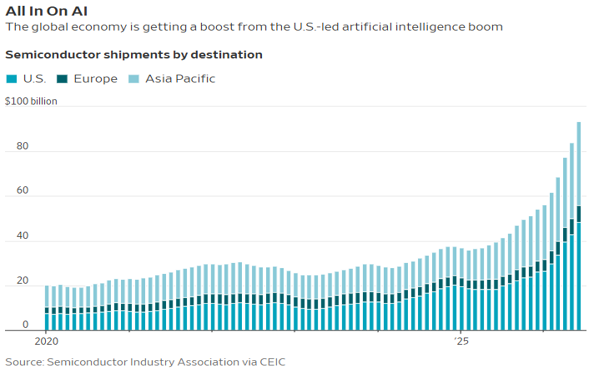
As we celebrate AI’s current and future achievements, Albert Camus seems to be warning about rats. In his novel The Plague, he describes the streets of the Algerian city of Oran, where dead rats make people sick until the plague takes over, given that people and officials ignored the signs.
Could it be that we are in a new era of disorder where complacency and tailwinds inhibit foresight? Could a dollar weakness come along as the twin sibling of a bond turmoil instigated by the train wreck of debt accumulation (which has more than doubled in less than ten years) and institutional derailment? In Camus’s work (which exemplifies absurdity), there is a vast institutional denial where officials and citizens ignore the rats and refuse to accept that a crisis may be forming. In a similar manner with absurd measures to control the rising yields, we ignore the threats of rising debts and corresponding rising yields. Dr. Pangloss keeps telling us that all is well – given earnings and their potential, good growth prospects, and solid spending – and under the auspices of a grand plan that advances the interests of the people.
In The Plague Camus introduces us to Dr. Paneloux, who like Dr. Pangloss in Voltaire’s satire, attempts to elevate an avoidable tragedy into a matter with a divine purpose. Nowadays, Dr. Paneloux and Dr. Pangloss have been replaced by the prospects of AI and the circular earnings due to loose monetary policy which can only make things worse.
The ending of Voltaire’s Candide encourages us to “tender the garden”, which is the only realistic solution to the encirclement of conflicts, tensions, and potential derailments. By tendering the garden of real interest rates, we can at least say that we start addressing one important cause, while realism calls us to focus on solid balance sheets, real cash flows, and intrinsic values. Before the plague hits, portfolio risks should be managed methodically and the portfolios should be tendered with the care recognizing that while the plague of debt will take its toll, the discipline of anchoring the portfolios may be one of few things that must be done for the tender they need.
