
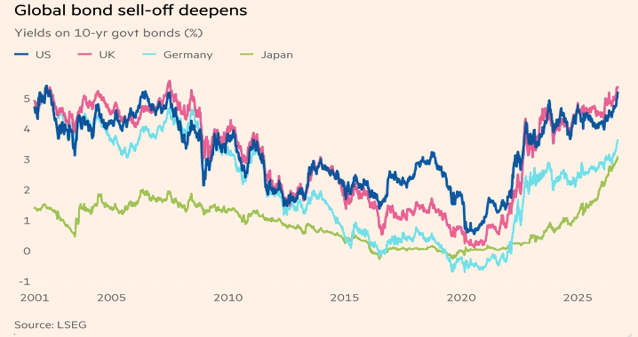
Yesterday, the 10-year Treasury broke its recent record (not seen since 2007) and reached a level of 5.326%. This is the highest level since 2002, and the question is whether such an upswing could reverse the gains in the stock market, given the rising borrowing costs and the historical record.
Speaking of the latter, a combination of strong earnings, investment spending (primarily on AI), other corporate and consumer spending, along with asset collateralization, and a persistently loose monetary policy creates a circular environment where optimism prevails, which soon may result in new records for stock indexes. The rising yield in the meantime is the result of inflationary pressures, government spending profligacy (around the world), demand for investment capital, sales of bonds by sovereign and institutional funds, strong aggregate demand, fear of more price pressures, and investors’ demand for higher returns so long as measures that could restrain rising debts are not seen on the horizon. It’s interesting to note that the rising yields are a global phenomenon, as shown below.
Moreover, as has been noted in recent commentaries, two recent developments highlight the pressures. First, food prices are rising at their fastest rate since 2022 (the Russian invasion of Ukraine) due to geopolitical and trade disruptions, as well as weather developments. Second, European bond markets are witnessing significant pressures (primarily in France) – as depicted in the graph below – igniting tremors of contagion and pressuring the euro downwards.
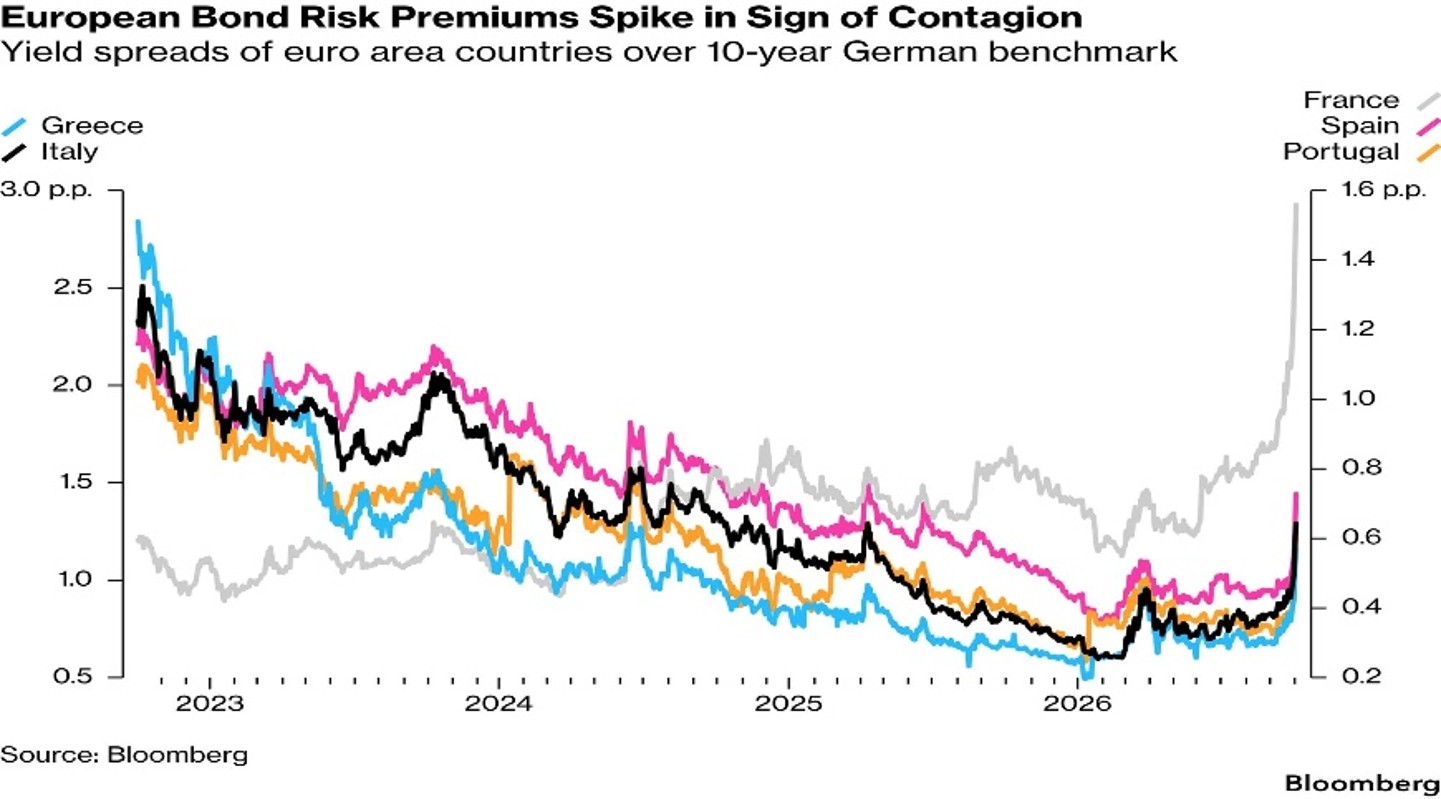
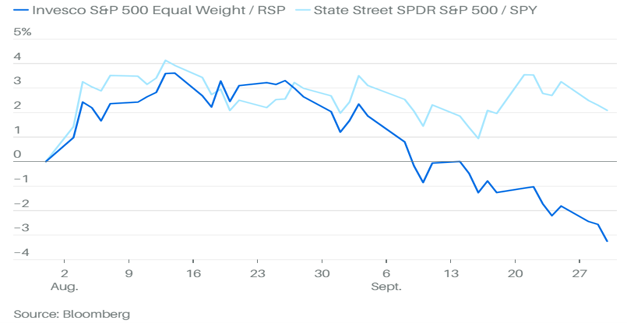
The fiscal and political pressures in France are rattling European markets as the premium demanded on French bonds is more than 1.5% higher than the equivalent yield on German bonds. However, as Asian funds are selling European and US bonds, a cascade of problems (besides bad market breadth between advancing and declining stocks) could arise (potentially including currency issues), especially when the AI honeymoon ends at a time when hyperscalers are burning cash and the savings glut is disappearing. We witnessed the possibility of that in September, when the cap-weighted S&P 500 lost just 0.5%, while the equal-weight version lost 5%, as shown below.
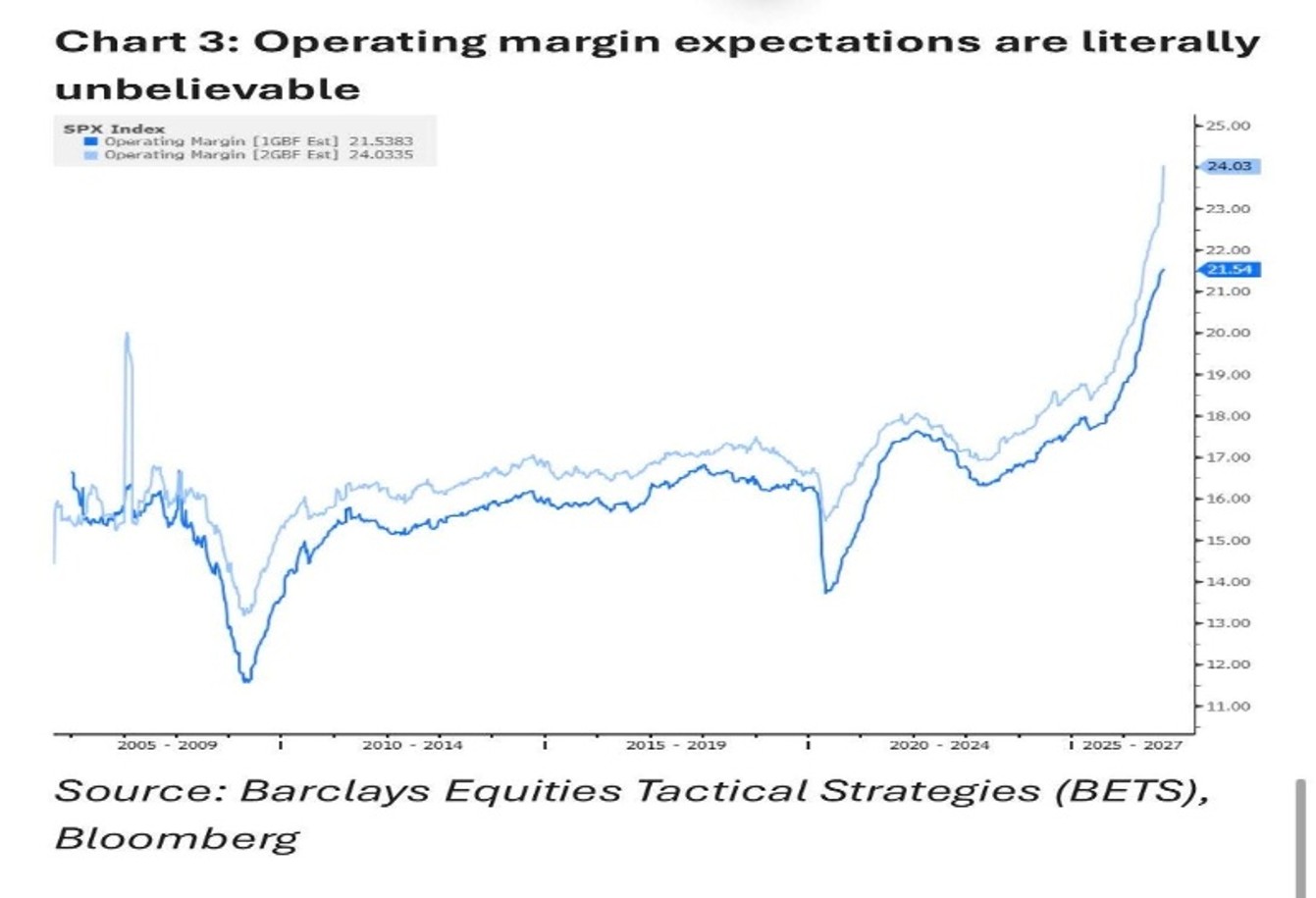
For the time being and until the year’s end, the manufacturing activities, spending, earnings growth, and abundant credit should prevail, possibly giving a push to stock indexes and the upswing. The recycling of circular deals creates new money and increases capital velocity, so despite the bad market breadth, the market may have room for gains, especially when we consider healthy operating margins as shown below, although the risk premium (the extra return over the risk-free return of Treasuries) is declining, which historically is associated with lower returns for the forthcoming years.
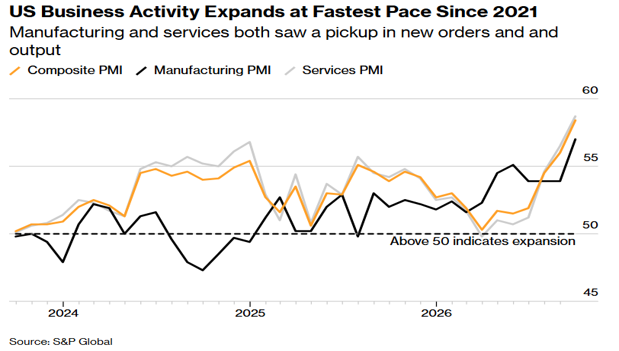
The momentum from expanding business activity (as shown in the following graph), which reflects a fast pace of robust demand, is pushing up new orders and supporting employment. Having said that, we should also state that this expansion is accompanied by severe supply bottlenecks, which in turn add fuel to the inflationary pressures.
Amid this optimism, we should also pay attention to the spread between the 10- and 2-year Treasury market. If the 10-year Treasury yield drops below the 2-year yield on the Treasury Note, and a yield inversion reappears, then more caution is warranted.
