
Global Market News
Global Equities Decline
Global equities were broadly negative this week, with equities dropping due to massive tech and semiconductor sell-offs. The S&P 500 and Nasdaq decreased 2.59% and 4.68% (its worst daily performance in over a year), respectively, while the Dow Jones lost 0.32%. The US 10-year Treasury gained several basis points to 4.53%, while the price of a barrel of West Texas Intermediate crude oil rose to surpass the $90 mark, closing Friday at $90.38. Volatility, as measured by the CBOE Volatility Index, sharply increased over the week to 21.51.
Hotter-Than Expected Jobs Report
The U.S. jobs report showed stronger‑than‑expected labor market momentum, with nonfarm payrolls increasing by about 172,000—well above forecasts—while the unemployment rate held steady at 4.3%, indicating continued resilience in hiring. This solid performance, along with upward revisions to prior months and steady wage growth, suggests the economy remains on a firm footing despite inflation pressures. As a result, markets are recalibrating expectations for monetary policy, with the robust data seen as reducing the urgency for rate cuts and potentially keeping the Federal Reserve on a more hawkish path, including the possibility of additional rate hikes or a longer period of elevated rates if inflation remains persistent.
International Developments
Middle East Conflict Update
The Middle East conflict escalated sharply this week on two fronts, complicating already fragile diplomatic efforts to end the broader Iran war. In Lebanon, Hezbollah formally rejected the latest US-brokered ceasefire agreement between Israel and the Lebanese government, with leader Naim Kassem calling the terms “absurd, humiliating and insulting” and demanding a full Israeli withdrawal before any halt in fighting. This directly contradicts Netanyahu’s stated goal of pressing the offensive until Hezbollah no longer poses a threat. A Serbian UN peacekeeper was killed in crossfire near Marjayoun, an Israeli soldier died in southern Lebanon, and Israeli strikes killed at least four Lebanese civilians, bringing total Lebanese deaths since the conflict resumed to over 3,500. In the Gulf, Iran launched a major strike on Kuwait’s international airport using 13 ballistic missiles and 17 drones, killing one Indian civilian and injuring at least 63 others, the first known fatalities in a Gulf nation since the April ceasefire took effect. Iran also fired on Bahrain and targeted civilian vessels in nearby waters, with its Revolutionary Guards claiming the strikes were retaliatory self-defense measures, while US Central Command described the Kuwait attack as “deliberate, calculated and unjustified.” The United States, meanwhile, intercepted four Iranian drones threatening maritime traffic and struck radar sites near the Strait of Hormuz. The escalation this week came as Trump publicly confirmed calling Netanyahu “crazy” during a tense phone call, expressing frustration that Israel’s Lebanon offensive is complicating a potential deal with Tehran to reopen the Strait of Hormuz. President Trump has also floated the idea of meeting directly with Iran’s Supreme Leader, Mojtaba Khamenei, if a deal can be reached. This would mark the first face-to-face meeting between a US President and an Iranian Supreme Leader in history.
Ukraine Strikes and Regains Ground
Ukraine demonstrated its expanding long-range strike capability this week by hitting St. Petersburg’s main oil export terminal and a naval base in nearby Kronstadt on the opening day of Russia’s prestigious St. Petersburg International Economic Forum, blanketing parts of Putin’s native city in black smoke as international business guests arrived. Ukrainian President Zelensky framed the strikes as part of a deliberate “long-range sanctions” strategy aimed at degrading Russia’s economic and military infrastructure, while the Kremlin cited the attacks as justification for its continued invasion without elaborating on the confirmed damage. The strikes deal a reputational blow to Putin, who has long used the forum to project an image of Russian normalcy and resilience in the face of Western sanctions, and who is expected to deliver a keynote address on Friday. The St. Petersburg strikes come against a backdrop of deteriorating battlefield conditions for Russia: open-source intelligence tracker Deep State UA reported that Russia suffered a net territorial loss in May, its first since Ukraine’s 2023 counteroffensive. The Institute for the Study of War separately recorded a net Russian loss of 44.78 square miles in April. Russia launched 37% more attacks in May than the previous month, suggesting Moscow is escalating aerial pressure even as its ground campaign stalls, while Ukraine’s drone warfare has now demonstrably reached deep into Russian territory, including Moscow and St. Petersburg.
Trump Renews the Tariff Engine
The Trump administration proposed sweeping new tariffs on 60 trading partners this week, its most aggressive effort yet to rebuild its tariff regime after the Supreme Court struck down the original “Liberation Day” duties in February. Invoking Section 301 of the 1974 Trade Act, the US Trade Representative’s Office proposed 12.5% tariffs on countries including China, Brazil, Japan, South Korea, and Switzerland, and 10% tariffs on Canada, Mexico, and the European Union, citing each country’s failure to effectively enforce laws prohibiting imports made with forced labor. The move represents a legal workaround following a succession of judicial setbacks, the Supreme Court invalidated the administration’s IEEPA-based tariffs in February, and a trade court struck down a subsequent 10% global duty in May, which is now set to expire at the end of July. Critically, the proposed rates closely track the tariff levels Trump had previously negotiated in bilateral trade deals before the courts intervened, suggesting the forced labor framing is as much a legal mechanism to restore the tariff wall as it is a labor rights enforcement action, a reading that trade analysts noted openly. The EU called the justification “unjustified,” China said it opposed “all forms of unilateral restrictions,” and Canada and Mexico, both of which adopted forced labor provisions under the original USMCA agreement, pushed back on being included. Public hearings are scheduled for July 7, after which the tariffs would formally take effect.
US Social & Political Developments
House Votes to Limit Trump’s War Power
The House passed a war powers resolution on Wednesday in a 215-208 vote to limit President Trump’s military authority in Iran, marking one of the most significant congressional rebukes of the administration’s handling of Operation Epic Fury since the conflict began on February 28. Four Republicans, Thomas Massie, Brian Fitzpatrick, Tom Barrett, and Warren Davidson, broke with their party to support the resolution alongside a unified Democratic caucus, citing constituent frustration over $5 gasoline, $6 diesel, and unaffordable fertilizer prices as core drivers of opposition. Trump responded on Truth Social by calling the four Republicans “grandstanders” and accusing Democrats of being “fueled by Trump Derangement Syndrome,” while Speaker Johnson warned the vote was “very dangerous” and could undermine ongoing peace negotiatio. The resolution, a concurrent measure that does not require presidential signature, faces uncertain legal standing, its binding force would ultimately need to be resolved in court. The vote’s passage was itself notable given that GOP leadership abruptly canceled an earlier scheduled vote on May 21 when Republican absences threatened to hand Democrats a win. Separately, the Pentagon, State Department, and USAID inspectors general launched a joint review of the war, citing their legal mandate to probe overseas military operations exceeding 60 days, a determination that implicitly rejects the administration’s argument that the 60-day War Powers Act clock reset when Trump declared a ceasefire in April.
Trump Appoints Bill Pulte as Acting Director of National Intelligence
President Trump has appointed Bill Pulte, head of the Federal Housing Finance Agency, as acting director of national intelligence to replace outgoing director Tulsi Gabbard, who is set to step down at the end of June. Pulte, a close Trump ally with no prior intelligence experience, will continue overseeing housing finance giants Fannie Mae and Freddie Mac while simultaneously leading the U.S. intelligence community. The surprise move has drawn bipartisan criticism, with lawmakers and analysts warning that the appointment could further politicize the intelligence apparatus and raise concerns about putting sensitive national security information in the hands of a figure seen as highly partisan.
Corporate/Sector News
IPO Mania
SpaceX’s record-breaking IPO and the anticipated public offerings of Anthropic and OpenAI could add roughly $4 trillion in market value to U.S. equities in the coming months, highlighting renewed enthusiasm surrounding AI and growth stocks. SpaceX alone is seeking to raise $75 billion at a valuation approaching $1.8 trillion, more than double the previous IPO record set by Saudi Aramco in 2019. Together, the three companies are expected to seek roughly $200 billion in fresh capital, an unprecedented amount for a series of public offerings and a reflection of investors’ willingness to fund ambitious long-term AI and technology projects. While the depth and liquidity of U.S. markets should allow investors to absorb these offerings, history suggests that waves of blockbuster IPOs often coincide with elevated valuations and late-stage bull markets, with previous surges in listings occurring ahead of the 2000 dot-com collapse, the 2008 financial crisis, and the 2022 bear market. In addition, highly valued IPOs have historically tended to underperform the broader market in the years following their debut. More broadly, the surge in equity issuance may signal a shift away from years of share scarcity as technology companies increasingly tap public markets to finance massive AI investments, potentially marking a new phase in the market cycle.
Google Announces $80 Billion Towards AI Development; Broadcom, CrowdStrike Plunge
Google’s decision to raise an additional $80 billion to support AI development underscores the intensifying competition among technology companies as they race to expand computing capacity and develop next-generation AI models. Alphabet has already projected $190 billion in capital expenditures this year and signaled that spending could increase further in 2027. At the same time, several prominent AI-related companies experienced sharp selloffs despite reporting strong results. Broadcom shares fell 13% after management projected third-quarter AI semiconductor revenue of $16 billion, below analyst expectations of $17.2 billion, even as the company reported 48% year-over-year sales growth. CrowdStrike dropped 11% despite delivering 26% revenue growth, beating earnings estimates, and raising full-year guidance, while cybersecurity peer Palo Alto Networks also declined following its earnings release.
Softbank Overtakes Toyota as Japan’s Largest Company
SoftBank’s ascent past Toyota as Japan’s most valuable company marks a dramatic shift in the country’s corporate hierarchy as investor enthusiasm surrounding AI continues to reshape global markets. Shares of the Masayoshi Son-led technology group have surged nearly 350% over the past year, lifting its market value to roughly ¥49 trillion and ending Toyota’s 23-year reign as Japan’s largest company. The milestone was previously reached only briefly during Japan’s internet bubble in 2000. Much of SoftBank’s rally has been driven by optimism surrounding its AI-related assets, including its stakes in OpenAI and Arm Holdings, as well as plans to invest at least $52 billion in data centers in France. Investor sentiment has also improved following news that portfolio companies OpenAI and SB Energy were preparing for US listings. Meanwhile, Toyota shares have declined amid rising oil prices and broader macroeconomic pressures weighing on the automotive sector. This development reflects the growing importance of AI-related businesses within Japan’s equity market.
Recommended Reads
America’s Data-Center Build-Out Is Falling Way Behind Schedule
‘Close to the Terminator narrative’: the dawn of self-improving AI
This Warming Planet Should Learn How to Talk About Migration
The New Career Odyssey Waiting for Today’s College Grads
This Week from BlackSummit
The BlackSummit Team
The BlackSummit Team
The FACS Team
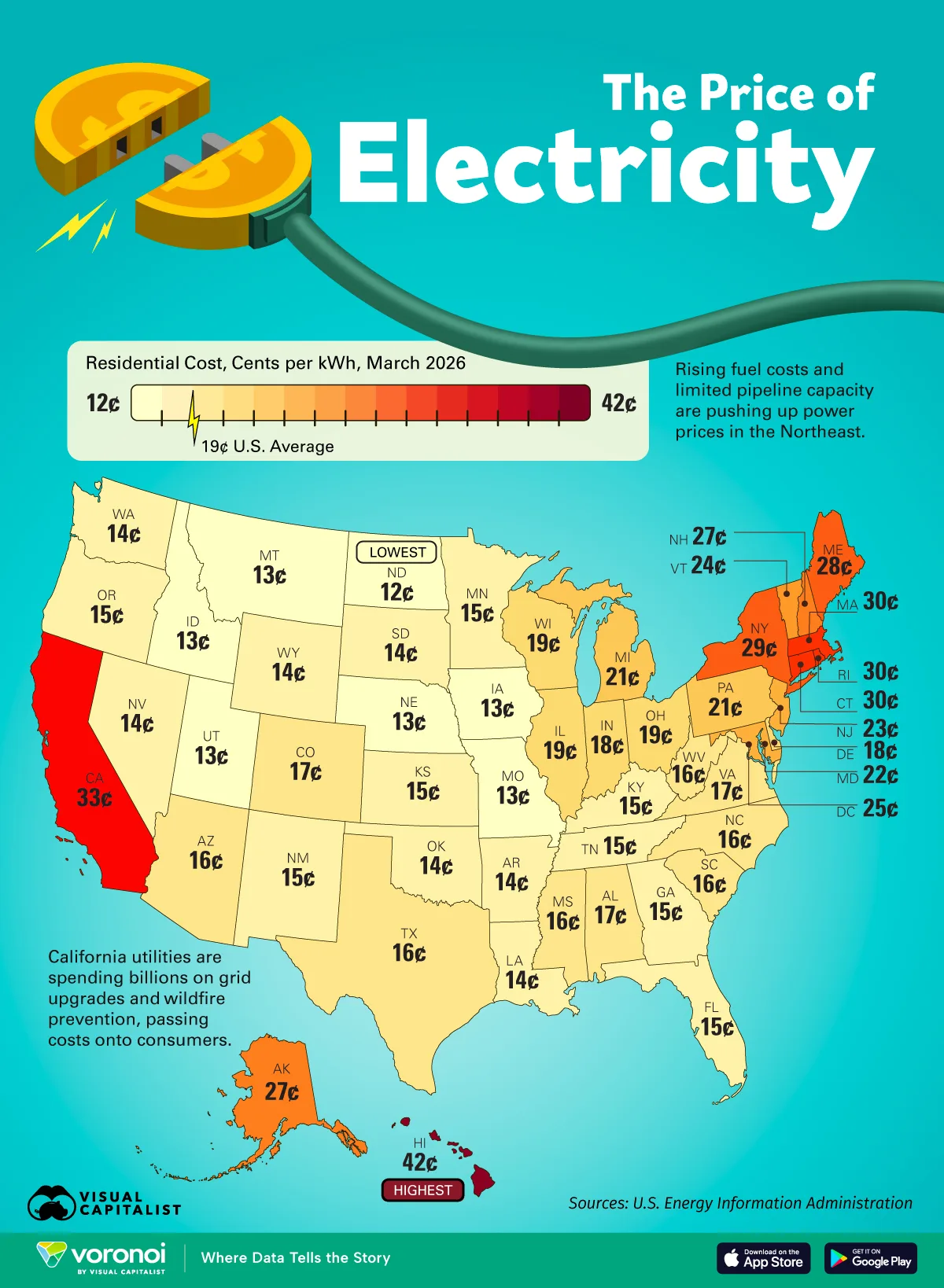
Image of the Week
Video of the Week
Why Big Oil is opening new frontiers
Financial Times
