
Global Market News
Global Equities Make Gains
Global equities made gains this week, trading near record highs. The S&P 500 and Nasdaq increased 0.45% and 0.88%, respectively, while the Dow Jones gained 2.13%. The US 10-year Treasury was little changed at 4.56%, though it briefly reached 4.68% midweek before hopes for de-escalation in the Middle East rose again. Meanwhile, the price of a barrel of West Texas Intermediate crude oil fell more than 8% on the week, closing Friday at $96.60 after rising to around $109 earlier in the week. Volatility, as measured by the CBOE Volatility Index, came down over the week to 16.70.
Kevin Warsh Takes Fed Helm
Kevin Warsh officially became the new Chair of the Federal Reserve yesterday, following a contentious confirmation process and a White House swearing‑in ceremony led by President Donald Trump. A former Fed governor and Wall Street banker, Warsh succeeds Jerome Powell at a time of elevated inflation and heightened political pressure on the central bank, particularly around interest rate policy. His appointment—confirmed by a narrow Senate vote—signals a potential shift toward a more reform‑oriented and possibly more activist Fed, with markets closely watching whether he will pivot toward rate cuts as encouraged by the Trump administration while also maintaining the institution’s independence.
International Developments
China Hosts Trump and Putin; Trump Says He Will Speak with Taiwan’s Leader
China has intensified high-level diplomacy by hosting multiple world leaders in Beijing, highlighted by U.S. President Donald Trump’s May 13–15 state visit and comparatively substantive subsequent talks between Chinese President Xi Jinping and Russian President Vladimir Putin, signaling Beijing’s effort to position itself at the center of global coordination on trade, security, and ongoing conflicts. President Xi used these meetings to deepen personal ties and promote a framework of “strategic stability.” Outcomes were largely framework-based, however. Despite positive optics for host and guest alike, the state visit yielded little progress on the biggest sticking points between the U.S. and China. Tensions over Taiwan remained a focal point, with Xi warning during talks with Trump that mishandling the issue could risk broader conflict and destabilize U.S.-China relations. Against this backdrop, Trump has said he plans to speak directly with Taiwanese President Lai Ching‑te—an unusual step that would break decades of diplomatic precedent—and is reportedly considering doing so as part of decision-making on a potential multibillion‑dollar arms sale to Taiwan. The proposed talks have raised concerns in Beijing, which opposes any official U.S.-Taiwan contact, and they add uncertainty to an already delicate geopolitical moment following efforts to stabilize relations between the world’s two largest economies.
Gulf War Update: Trump Delays Attack While Iran Reviews U.S. Proposal
The U.S.–Iran conflict remains at a fragile crossroads between diplomacy and renewed escalation, with indirect negotiations—mediated largely through Pakistan—showing limited but notable progress while major disagreements persist. U.S. officials said talks are in their “final stages” with some “slight progress.” Still, key sticking points, including Iran’s nuclear program, control of the Strait of Hormuz, sanctions relief, and the fate of enriched uranium, continue to block a deal. President Donald Trump has signaled willingness to give diplomacy a few more days, while simultaneously warning that military action could resume quickly if Iran does not accept U.S. terms, underscoring the volatility of the situation. Iran, for its part, is reviewing the latest U.S. proposal but maintains demands for sanctions relief, an end to the U.S. blockade, and recognition of its authority over the Strait of Hormuz, where it continues to exert pressure on global shipping routes. Despite the April ceasefire, tensions remain high, with both sides exchanging threats and sporadic incidents persisting in the region.
U.S. DOJ Indicts Raúl Castro
The U.S. Department of Justice announced on May 20 that it has indicted former Cuban President Raúl Castro and five co‑defendants on charges including conspiracy to kill U.S. nationals, destruction of aircraft, and four counts of murder, stemming from the 1996 shootdown of two unarmed civilian planes operated by the exile group Brothers to the Rescue. Prosecutors allege that Castro, who was Cuba’s defense minister at the time, played a direct role in authorizing the attack, which killed four people—three of them U.S. citizens—over international waters. The indictment represents a rare and significant legal action targeting a former head of state, with U.S. officials framing it as part of a long-standing effort to secure accountability for American victims. While it is unlikely to result in a trial because Cuba does not extradite its citizens, the case underscores a renewed willingness by the United States to pursue high-level foreign leaders in its courts and the continuation of its ‘Maximum Pressure’ Campaign on Cuba. This legal escalation has coincided with rising tensions on the island, where thousands of Cubans gathered outside the U.S. Embassy in Havana on May 22 in a government-organized protest denouncing the indictment and broader U.S. policy, with officials portraying the charges as politically motivated and part of a broader effort to destabilize the country. At the same time, Cuba continues to face mounting domestic challenges, including recurring protests driven by economic hardship, shortages of basic goods, and widespread public frustration, compounded by a deepening energy crisis that has led to prolonged blackouts across the island.
US Social & Political Developments
U.S. Primary Results Underscore Trump Revenge Tour
Recent U.S. primary election results, particularly contests across states like Kentucky, Georgia, and Indiana, demonstrate the extent of Trump’s sway within the Republican Party. Republican incumbents and establishment figures who have broken with President Trump over the administration’s priorities faced pressure or closer-than-expected races. Seven-term Rep. Thomas Massie’s loss in Kentucky is one such race, where the Trump-endorsed candidate, Ed Gallrein, won the Republican primary in the state’s fourth congressional district, now confirmed as the most expensive in U.S. history. This result underscores fissures in party dynamics, which are beginning to affect President Trump’s legislative agenda on Capitol Hill. In Congress, GOP leaders recently canceled a House vote on an Iran war powers resolution after realizing defections and absences could lead to a defeat, following a tied vote earlier in May and a Senate breakthrough where four Republicans joined Democrats to advance limits on Trump’s war authority. Notably, one of those defectors, Sen. Bill Cassidy, had just lost his primary, suggesting that freed-from-primary-pressure lawmakers may be more willing to break with the administration. While Trump retains strong influence over Republican primaries, the narrow GOP majority and emerging fractures could complicate major agenda items—including budget reconciliation efforts tied to priorities like the White House Ballroom renovation and broader spending proposals—by making it harder to maintain unified party support in closely contested votes.
Trump-IRS Settlement: Proposed $1.8 M ‘Anti-Weaponization Fund’
The Trump administration’s settlement of its $10 billion lawsuit against the IRS has sparked intense controversy, centering on the creation of a roughly $1.8 billion “Anti‑Weaponization Fund” and broader concerns about executive power, accountability, and potential self-dealing. Under the agreement, Trump, his sons, and the Trump Organization dropped their lawsuit in exchange for a formal apology and the establishment of the fund—financed through the federal Judgment Fund—to compensate individuals claiming they were harmed by prior government “weaponization,” which could potentially include allies of the administration and Jan. 6 defendants. At the same time, the settlement includes sweeping provisions that effectively bar the IRS from pursuing certain tax claims or audits involving Trump, his family, and their businesses, raising alarm among experts about unprecedented levels of legal protection and what critics describe as de facto “immunity”. Public and watchdog responses have been polarized: supporters argue the fund redresses political persecution, but critics, including two U.S. Capitol police officers who are suing the Trump administration over the fund, widely view it as a loosely controlled “slush fund” that concentrates power in the executive branch and erodes norms around oversight, transparency, and equal application of the law.
Corporate/Sector News
Amid Flurry of IPOs, Musk-Altman Jury Reaches a Decision
SpaceX has formally launched the largest IPO in history, filing for a June 2026 listing at roughly a $1.75 trillion valuation, with plans to raise up to $75 billion from investors. OpenAI is close behind, preparing a confidential filing for a potential late‑2026 IPO that could value the company at around $1 trillion, fueled by rapid revenue growth but still significant losses. Both listings are expected to define the AI market and could rank among the largest offerings in financial history. The Musk‑Altman trial, however, has quickly become the more decisive story shaping that landscape. In a closely watched federal case in Oakland that concluded on May 18, a nine‑person jury unanimously rejected Elon Musk’s claims against Sam Altman, OpenAI, and Microsoft after less than two hours of deliberation, finding that Musk filed his lawsuit too late and missed the applicable statute of limitations. The lawsuit, filed in 2024, centered on Musk’s allegation that OpenAI’s leadership violated a founding agreement to keep the organization nonprofit, instead transforming it into a for‑profit enterprise that enriched insiders. However, the court never ruled on the merits of those claims, focusing instead on the timing defect. The outcome represents a major legal and strategic victory for Altman and OpenAI: it preserves the company’s current corporate structure, removes the threat of forced restructuring or massive damages (which Musk had pegged at well over $100 billion), and eliminates a key uncertainty hanging over its planned IPO. Musk has criticized the ruling as a “technicality” and vowed to appeal, arguing that the court did not address whether OpenAI breached its charitable mission. Still, the verdict solidifies OpenAI’s position in the AI race and intensifies the rivalry between Musk and Altman—shifting their competition from the courtroom to the public markets, where their dueling mega‑IPOs are set to become the next battleground.
US Extends Waiver for Buying Russian Oil and Britain Eases Sanctions on Russian Oil Refined in Other Countries
Recent waivers on Russian oil sanctions have allowed narrow, temporary exemptions that allow specific shipments of Russian crude already loaded onto tankers to be delivered without violating broader restrictions. The U.S. Treasury has repeatedly extended these waivers in 2026, most recently on May 18, to stabilize global energy markets during major supply disruptions, including the Iran conflict and the partial closure of the Strait of Hormuz, which have tightened supply and pushed prices higher. Policymakers argue the exemptions help ensure vulnerable countries can access fuel and avoid price spikes, even as the broader sanctions framework remains in place. In parallel, the UK has taken a similar but more indirect approach by allowing imports of diesel and jet fuel refined in third countries—especially India—from Russian crude, effectively exploiting a long‑standing “refining loophole” to shore up domestic supply amid shortages. Critics say these moves collectively risk undermining sanctions by enabling continued flows of Russian oil revenues, highlighting the tension between energy security needs and efforts to economically pressure Moscow.
Walmart’s Meager Projections
Walmart’s latest outlook has raised concerns after the retail giant issued cautious projections that fell short of expectations, signaling a more challenging environment ahead despite solid recent sales. The company continues to guide for relatively modest revenue growth of about 3.5%–4.5% and earnings below analyst forecasts, reflecting pressure from rising costs and a softening consumer backdrop. Executives have pointed to uneven consumer spending—particularly among lower-income shoppers—and headwinds such as higher fuel and transportation costs, which are squeezing both household budgets and Walmart’s margins. While demand for essentials remains steady, the company expects customers to pull back on discretionary purchases, reinforcing broader concerns that U.S. consumer spending growth may be slowing.
Recommended Reads
What Is The Thucydides Trap and Why Did Xi Raise It With Trump?
India-Africa Strategic Partnership: Challenges, Potential, and Possible Pathways
‘Undervalued’ Japan Companies Gird for Wave of Foreign Acquisitions
This Week from BlackSummit
CROSSROADS: North America, Europe, China, India & Japan
The BlackSummit Team
CROSSROADS: Middle East, Asia, Latin America, Sub-Saharan Africa
The BlackSummit Team
The BlackSummit Team
The Fundamental Analytics Team
Image of the Week
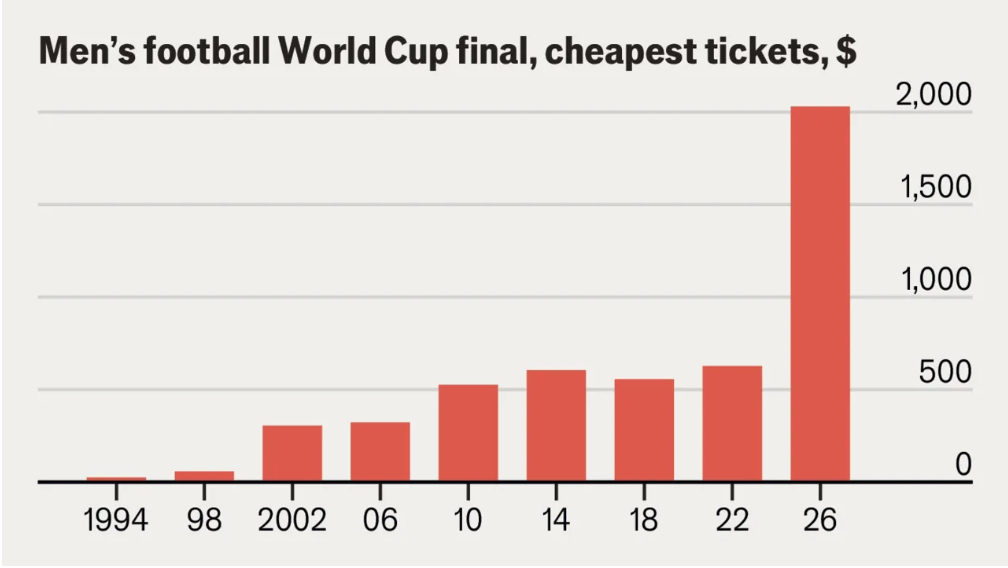
The Economist
Video of the Week
How China’s Housing Crisis Has Global Consequences
The New York Times
