
Global Market News
Global Equities Make Gains
Global equities made gains this week, trading near record highs. The S&P 500 and Nasdaq increased 2.33% and 4.51%, respectively, while the Dow Jones gained 0.22%. The US 10-year Treasury was little changed at 4.36%, while the price of a barrel of West Texas Intermediate crude oil fell several dollars, closing Friday at $94.76. Volatility, as measured by the CBOE Volatility Index, rose slightly to 17.19.
Strong Earnings Growth and Resilient Labor Market Amid Emerging Trade Policy Uncertainty
Q1 U.S. equity earnings have been exceptionally strong, arguably the best in two decades, showing broad-based, double-digit growth across all 11 sectors and helping justify megacap valuations, while analysts are notably raising (rather than lowering) Q2 earnings estimates, with bottom-up EPS increasing 2.1% in April. At the same time, the U.S. labor market remains resilient, with April nonfarm payrolls rising by 115,000 (above expectations), upward revisions to March, back-to-back months of 100,000+ gains, steady unemployment at 4.3%, and moderate wage growth suggesting limited inflation pressure despite ongoing concerns about AI-driven job displacement and geopolitical risks. Meanwhile, trade policy uncertainty has reemerged after the U.S. Supreme Court struck down the Trump administration’s IEEPA tariffs, prompting the imposition of a global 10% tariff under Section 122 of the Trade Act; however, the U.S. Court of International Trade subsequently ruled that these tariffs do not meet the legal criteria for import surcharges, and while no injunction was issued and the measures are set to expire in July, importers may see only limited near-term relief.
International Developments
Tensions Across the Gulf Remain Elevated on Multiple Fronts
In Lebanon, Israel broke its ceasefire with Hezbollah by striking a residential building in Beirut’s southern suburbs, killing the commander of Hezbollah’s elite Radwan Forces — the first such strike near the Lebanese capital since a U.S.-brokered truce took effect in mid-April. Meanwhile, the broader U.S.-Iran conflict, which began on February 28th with American and Israeli strikes on Iran, continues to evolve amid both escalation and renewed diplomatic efforts. Hopes have risen that Iran and the U.S. may reach a memorandum of understanding, followed by a 30-day negotiation to end the war, though Tehran is still reviewing Washington’s latest proposal, and President Trump warned that failure to agree could trigger significantly intensified bombing. China, Iran’s primary economic partner, has begun pressuring Tehran to reach a deal, including reportedly restricting financing to sanctioned refiners ahead of Trump’s planned visit to Beijing. On the ground, tensions remain high: the U.S. briefly launched “Project Freedom” to escort stranded ships through the Persian Gulf before suspending it due to regional opposition, though Saudi Arabia and Kuwait have since lifted restrictions and a restart may be imminent. Military exchanges have intensified, including clashes near the Strait of Hormuz and Iranian missile and drone attacks on U.S. vessels and the UAE, most of which were intercepted, while the U.S. has largely held back to preserve diplomatic momentum, drawing frustration from regional allies. Despite continued disruptions to global shipping through the strait, crude oil prices have fallen sharply from recent highs, and Iraq has reportedly begun offering heavily discounted oil to attract buyers willing to navigate the region.
Failed Ceasefire as Escalating Strikes Undermine Peace Efforts in Ukraine
Ukraine’s unilateral ceasefire, which took effect at midnight Tuesday, has been met with continued Russian aggression, effectively collapsing before it could gain traction. In the hours leading up to the ceasefire, Russian strikes killed at least 27 civilians and wounded 120 others across multiple Ukrainian regions, including Zaporizhzhia, Kramatorsk, and Poltava. Once the ceasefire began, Russia launched over 100 drones and missiles overnight, with attacks hitting a kindergarten in Sumy and continuing into Wednesday morning. The UN reported that Russian strikes since last Friday have killed at least 70 civilians and wounded more than 500 across 14 regions. Ukraine had announced the ceasefire partly in response to Russia’s pledge to pause fighting on May 8-9 to mark the 81st anniversary of the Soviet Union’s defeat of Nazi Germany in World War II — a pattern critics note Russia has used before with no tangible results. Ukrainian President Zelenskyy condemned Russia’s actions as a clear rejection of peace, while Foreign Minister Sybiha accused Moscow of insincerity and called for new international sanctions and greater military support for Ukraine. Separately, a Ukrainian drone struck a high-rise residential building in Moscow near Red Square, prompting Russia to threaten a “massive missile strike” on central Kyiv in retaliation.
U.S.-EU Trade Tensions Rise as Tariff Deadline Looms
President Donald Trump has set a July 4 deadline for the European Union to implement commitments under a previously agreed trade deal, warning that tariffs on EU goods—particularly automotives—could rise significantly if progress is not made, specifically threatening a 25% tariff on automotives if the deal isn’t ratified soon. The dispute stems from delays within the EU in finalizing legislation to reduce tariffs on U.S. goods, which the U.S. argues is overdue. While European Commission President Ursula von der Leyen said both sides remain committed, and negotiations are progressing, EU lawmakers acknowledge that differences remain and further talks are needed to resolve key disputes, such as safeguards and conditions tied to U.S. tariff reductions on steel and aluminum. U.S. officials have also signaled that additional trade measures beyond auto tariffs could be imposed if the EU fails to comply. energy volatility.
US Social & Political Developments
US Exports of Oil and Refined Products at All-Time High
U.S. oil and refined product exports surged to an all-time high of 14.2 million barrels per day last week, with oil product exports alone reaching a record 8.2 million barrels per day, driven almost entirely by global demand created by the Strait of Hormuz blockade. Diesel and jet fuel exports have been particularly acute, as European and Asian refiners scramble to replace lost Gulf supply, effectively making the U.S. the world’s supplier of last resort. However, the record export volumes are creating a mounting domestic problem: US distillate stockpiles have fallen to their lowest level since 2005, retail gasoline prices have climbed to $4.48 per gallon — up 30 cents in a week — and diesel sits at $5.67 per gallon, squeezing trucking, agriculture, and small businesses. The Strategic Petroleum Reserve, already heavily drawn down from prior emergency releases, is being further depleted to offset tightening inventories. While the Trump administration has publicly ruled out export restrictions, political pressure is building rapidly as pump prices approach levels that historically inflict serious midterm election damage on incumbent parties. Legislation to restrict gasoline exports during high-price periods has already been reintroduced in Congress, and with midterms six months away, any single social media post from Trump signaling a policy reversal could immediately move global oil markets.
Trump Proposes $1 billion for White House in Immigration Bill
Republicans in Congress are advancing a roughly $70 billion funding plan for immigration enforcement agencies ICE and CBP, following a bipartisan deal that ended a prolonged government shutdown but excluded these agencies due to Democratic opposition. Most of the funding would support enforcement operations, further strengthening the agencies’ autonomy, while portions include $1 billion for Secret Service security tied to a controversial White House project—despite President Trump repeatedly stating that his planned White House ballroom would be funded by private donors—and $1.5 billion for Justice Department activities. The proposal has sparked criticism from Democrats, who argue it prioritizes excessive enforcement and unnecessary spending during a time of rising costs linked to the ongoing conflict with Iran, while Republicans aim to pass the bill by June 1st.
Corporate/Sector News
Upcoming SpaceX IPO
SpaceX is officially on track to launch the largest public listing in U.S. history, having confidentially filed IPO paperwork with the SEC, with plans to begin trading on public exchanges in late June or early July of this year. The mega-offering aims to raise a record-breaking $75 billion, targeting an unprecedented corporate valuation between $1.75 trillion and $2 trillion. This public debut marks a pivot from prior strategies, as the offering will completely integrate the highly lucrative Starlink satellite internet business rather than spinning it off independently. The company is anticipated to publicly release its official S-1 registration prospectus in late May, shedding light on its closely guarded finances. Lead active underwriters, including Goldman Sachs, Morgan Stanley, and JPMorgan, will officially launch the institutional investor roadshow. The IPO follows SpaceX’s blockbuster February 2026 all-stock acquisition of Musk’s startup xAI. Dissolved as an independent entity, xAI is fully merged under the unified “SpaceXAI” banner to fund orbital AI data centers and its massive 220,000-GPU Colossus supercomputer cluster. Filings show intense pre-IPO capital expenditure, including a $55 billion Texas chip complex built with Tesla, a new solar factory, and over $1.5 billion invested in the Starship rocket system. Starlink surpassed 10million global subscribers in early 2026, serving as SpaceX’s primary revenue engine with 2025 sales clearing $10 billion.
Anthropic’s Deal with xAI
Anthropic signed a massive infrastructure partnership with Elon Musk’s SpaceXAI (the entity formed after SpaceX absorbed xAI) to secure immediate access to the Colossus 1 data center in Memphis, Tennessee. Anthropic is reportedly leasing 100% of the compute capacity at the Colossus 1 facility. The deal unlocks over 300 megawatts of power and a cluster of more than 220,000 Nvidia GPUs, including H100, H200, and next-generation GB200 accelerators. The capacity is rolling out immediately and will be fully online within the month. Anthropic is using the added compute to alleviate physical network constraints and lift stringent rate caps. The deal represents a sharp pivot for Elon Musk, who historically criticized Anthropic as “woke” and “misanthropic”. Musk noted on X that after extensive meetings with Anthropic leadership to audit their safety frameworks, “nobody set off my evil detector,” paving the way for the commercial partnership.
South Korea’s Stock Index Passes Benchmark
South Korea’s benchmark KOSPI index shattered the historic 7,000-point milestoneon Wednesday, closing at an all-time high of 7,384.56 amid an explosive, AI-driven semiconductor rally. The surge propelled South Korea’s total equity market capitalization past Canada’s to become the 7th largest stock market globally. Much of the recent growth was from Samsung Electronics, which soared 14.4%, surpassing a $1 trillion market cap. It is the second Asian company to do so after TSMC. The KOSPI has gained 75% year-to-date in 2026, following a 76% gain in 2025. It took just over 100 days to rocket from 5,000 to past 7,000 points. Unprecedented demand for high-bandwidth memory (HBM) chips heavily boosted Samsung Electronics and rival SK Hynix, which jumped 10.6%. Together, they represent 47% of the index weight. South Korea’s economic macro-environment was also helped by strong domestic factory output (April PMI hit 53.6), alongside easing U.S.–Iran shipping tensions, which lowered oil-driven inflation fears. The historic high masked a divided broader market. While the index peaked, 72% of individual KOSPI stocks actually declined on the day due to extreme capital concentration in chipmakers.
Recommended Reads
Another Oil Crisis is Here. How Will American Drivers Respond?
The U.A.E.’s OPEC Bombshell Signals a New Middle East Order
Can Space Be Disrupted Like the Strait of Hormuz?
A Dozen Young Job Hunters on What it Takes to Get Hired
This Week from BlackSummit
The BlackSummit Team
The BlackSummit Team
Image of the Week
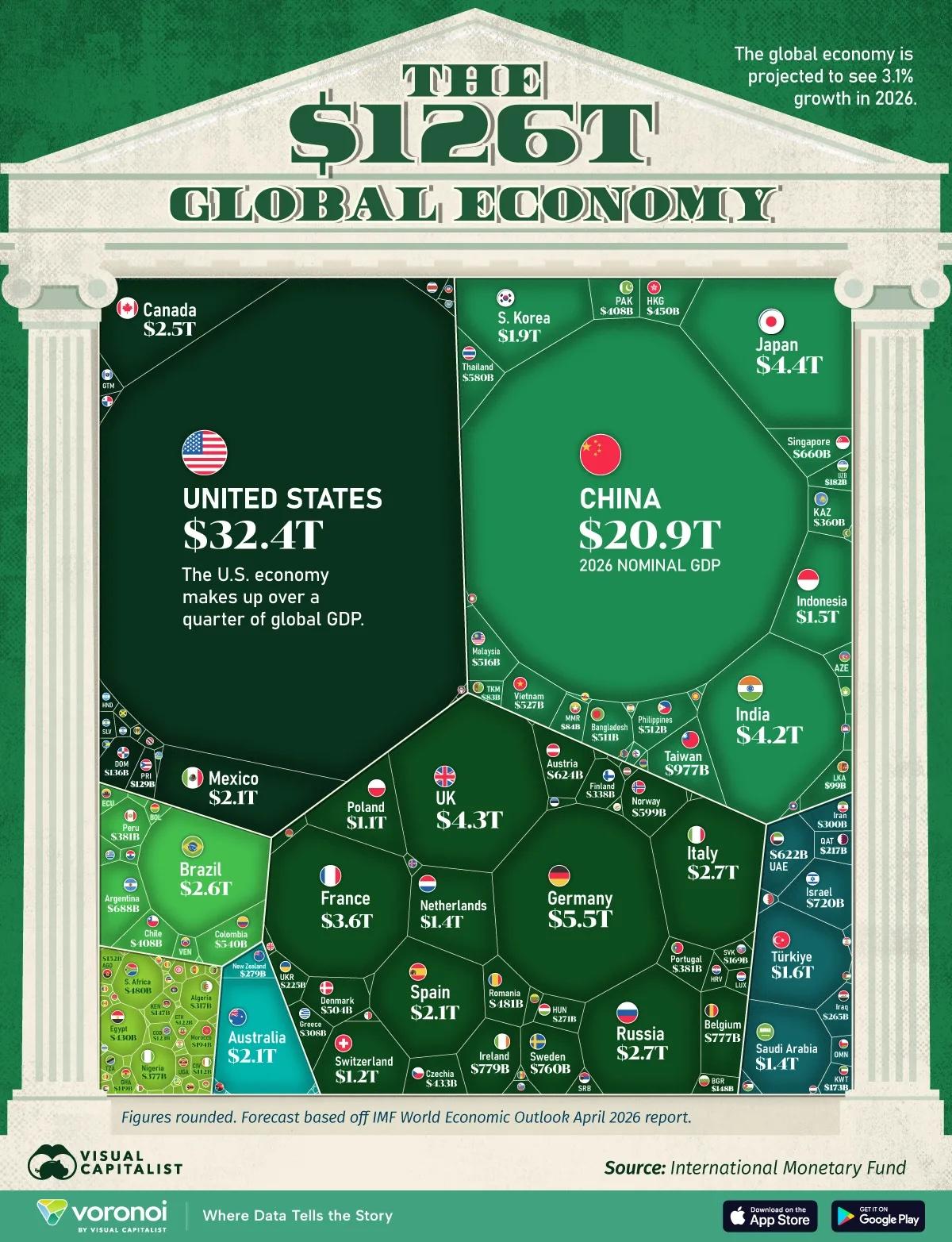
Video of the Week
Are AI Bosses More Powerful than Rockefeller?
The Economist
