
Global Market News
Global Equities Decline
Global equities declined on the week as fears mounted over a prolonged conflict in the Middle East. The S&P 500 and Nasdaq decreased 1.60% and 1.26%, respectively, while the Dow Jones dropped 1.99%. The US 10-year Treasury note continued its rise, increasing another 14 basis points to close the week at 4.28%. Meanwhile, the price of a barrel of West Texas Intermediate crude oil surged 8.5% to end the week at $98.62. Volatility, as measured by the CBOE Volatility Index, lowered over the week to 27.19.
Latest U.S. Economic Indicators Highlight Mixed Momentum
Recent data offers a mixed picture of the US economy. The economy grew at a slower 0.7% annualized pace in Q4 2025, revised down from 1.4%, largely because the record‑long government shutdown shaved more than a percentage point from growth. Core PCE inflation edged up to 3.1% in January, in line with expectations. Although growth is expected to rebound in Q1, harsh winter weather may limit the strength of the recovery. Meanwhile, the budget deficit reached $1 trillion through the first five months of the fiscal year, and the trade deficit narrowed sharply to $54.5 billion in January.
International Developments
Intensifying Middle East Conflict Spurs Global Security and Energy Concerns
Conflict between the United States, Israel, and Iran is intensifying military deployments and rattling global energy markets as fighting spreads across the Middle East. US President Donald Trump signaled Thursday that preventing Iran from acquiring a nuclear weapon is now a higher priority for his administration than stabilizing oil prices, a sharper stance than earlier in the week, when he suggested the US had already achieved many of its objectives. The Pentagon has moved additional warships and a Marine expeditionary unit of roughly 5,000 personnel to the region after six US crewmembers died aboard a KC-135 refueling aircraft in western Iraq on Thursday. Iran continues attacks on shipping in the Strait of Hormuz, a critical global oil chokepoint that has driven crude prices over $100 (nearing $120 at their highest point so far) since the war began. Amid reports of Iran laying mines in the Strait, US officials say they are preparing options to potentially escort commercial vessels. At the same time, Israel has expanded pressure on Iran’s regional network by escalating strikes in Lebanon and dropping leaflets over Beirut urging citizens to disarm Hezbollah, raising fears of a broader ground conflict. Inside Iran, the regime has staged pro-government rallies even as uncertainty grows over leadership following the reported killing of Ayatollah Ali Khamenei and the possible injury of his successor and son, Mojtaba Khamenei. Meanwhile, President Trump has tempered earlier calls for mass uprisings, acknowledging that the regime’s security forces make an immediate popular revolt unlikely.
IEA To Release 400 million Barrels of Oil; US Lifts Sanctions on Russian Oil
The International Energy Agency announced that it will release 400 million barrels of oil reserves, the largest release of government reserves in its history. The US, one of 32 IEA members, will supply 172 million of these barrels from its own reserves. Brent crude was trading at $65 per barrel and is now over $100. In comparison, the IEA released only 182 million barrels in 2022 when Russia first invaded Ukraine. The IEA has not yet provided a precise timeline because supply will be limited to how fast the oil can be extracted from reserves. As the US and Europe grapple with the energy disruptions, Russia has emerged as a major economic beneficiary of the Middle East conflict, with disruptions to shipping through the Strait of Hormuz pushing global oil prices higher and boosting demand for Russian crude from India and China. Analysts estimate that Moscow has already gained roughly $1.3-1.9 billion in additional tax revenues in the first weeks of the crisis and could earn $3.3-5 billion by the end of the month if prices remain elevated. Russian oil, previously sold at a discount due to sanctions, is now reportedly trading at a premium in some markets, helping offset earlier revenue declines and easing pressure on Russia’s strained budget. This new revenue stream comes in response to the US easing sanctions on Russian oil in an attempt to mitigate rising prices from its operations in Iran.
Von Der Leyen Backs Nuclear Power
European leaders are increasingly reconsidering nuclear power as energy security concerns intensify amid global instability and volatile fossil fuel markets. European Commission President, Ursula von der Leyen, recently described Europe’s long decline in nuclear energy generation from roughly 30 percent of electricity in 1990 to about 15 percent today as a strategic mistake. She argued that reliance on imported oil and gas has left the continent vulnerable to external shocks such as the current Middle East crisis. At a nuclear energy summit in Paris, von der Leyen called for a renewed push into next generation nuclear technology, including small modular reactors by the early 2030s, supported by new EU financing and regulatory reforms to attract private investment. While countries such as France strongly support expanding nuclear power to ensure stable low carbon electricity and industrial competitiveness, the issue remains politically contested across Europe as some governments continue to favor renewable energy while others view nuclear as essential to long term energy independence.
US Social & Political Developments
Trade Probes Launched As Trump Attempts to Rebuild Strategy
As of this month, the US government is in the process of developing a massive refund system for approximately $166 billion in tariffs following a February 20th Supreme Court ruling that declared certain duties under the International Emergency Economic Powers Act (IEEPA) illegal. US Customs and Border Protection (CBP) is building an automated portal called the Consolidated Administration and Processing of Entries (CAPE). As of March 12th, the system is reported to be 40% to 80% complete. CBP estimates it may be ready for use by late April 2026. Refunds are primarily owed to Importers of Record who directly paid the duties on over 53 million individual shipments. Delays in processing are estimated to cost taxpayers roughly $700 million per month in accruing interest on the overpaid amounts. While companies are being urged to pass refunds to consumers as price cuts or bonuses, they are generally not legally obligated to do so unless dictated by private contracts. In parallel with the refund effort, the Trump administration has opened trade investigations into more than a dozen countries, including some of the US’s largest trading partners, such as China, the European Union, Mexico, India, Japan, South Korea and Taiwan, as the Trump administration attempts to rebuild its tariff strategy after the ruling limited the scope of duties that can be imposed under IEEPA.
FBI Opens Investigation into Michigan & Virginia Attacks
Two violent incidents in the US involving suspected extremist motives prompted major law enforcement responses this week as the FBI undertakes two new investigations. In Michigan, authorities say a man drove a truck into Temple Israel in West Bloomfield and opened fire before being killed during a confrontation with synagogue security. The FBI is investigating this as a targeted act of violence against the Jewish community amid reports that the man recently lost family in an Israeli airstrike in Lebanon; one security guard was injured, but no congregants were harmed. Separately in Virginia, a former Army National Guard member previously imprisoned for attempting to aid the Islamic State carried out a shooting at Old Dominion University. He killed one person and wounded two others before being subdued and killed by ROTC students who intervened within minutes. Federal officials are treating the campus attack as terrorism, while both incidents have heightened concerns about domestic security and potential retaliatory violence amid broader geopolitical tensions.
Corporate/Sector News
Anthropic Sues Pentagon
On March 9th, Anthropic filed two lawsuits against the US Department of War and other federal agencies. This legal action follows the Pentagon’s decision to designate Anthropic as a “supply chain security risk.” The conflict stems from a breakdown in negotiations over a $200 million defense contract. Anthropic refused to remove “guardrails” on its Claude AI model that prevent it from being used for autonomous military operations or potential mass surveillance of U.S. citizens. After the refusal, the Pentagon applied the “supply chain risk” label, an action typically reserved for foreign companies like Huawei, effectively banning the company from defense work and ordering federal agencies to phase out its technology. In its filings in California and Washington, D.C., Anthropic argues the designation is an “unlawful campaign of retaliation” for the company’s protected speech and refusal to waive safety standards. The suit alleges violations of First Amendment rights and due process, as well as claiming that the Pentagon exceeded its statutory authority, as the specific “supply chain risk” laws were not intended for domestic firms.
China’s BYD Exploring Car Production in Canada
BYD is actively exploring building a manufacturing plant in Canada and has signaled openness to acquiring a “legacy” global automaker. These plans, confirmed by Executive Vice President Stella Li in March 2026, mark a significant shift in BYD’s North American strategy following a recent trade reset between Canada and China. BYD prefers to own and operate its own factory rather than entering a joint venture (JV) with local Canadian companies. Li stated, “I don’t think a JV will work,” despite the Canadian government’s preference for partnerships with domestic firms. The move follows a January 2026 agreement where Canada cut tariffs on Chinese electric vehicles from 100% to approximately 6.1% for up to 49,000 units annually. Further, a Canadian plant could help BYD bypass trade barriers and potentially leverage the USMCA trade agreement for broader market access. BYD is evaluating the acquisition of struggling legacy automakers from the U.S., Europe, or Japan to accelerate global expansion. While “no deal is imminent” and specific targets have not been named, the company is actively reviewing potential assets. Industry observers compare this potential move to Geely’s acquisition of Volvo, which successfully revitalized a legacy brand.
Google Closes $32 Billion Wiz Deal
Google officially closed its $32 billion acquisition of the Israeli cybersecurity firm Wiz on March 11th. This transaction stands as the largest acquisition in Google’s history and the largest venture-backed M&A deal ever. The all-cash deal was finalized at $32 billion after Wiz rejected an earlier 2024 offer of $23 billion. Wiz will be integrated into the Google Cloud unit but will maintain its own brand and multi-cloud support for competitors like Amazon Web Services (AWS), Microsoft Azure, and Oracle Cloud. The deal closed a full year after its initial March 2025 announcement, having cleared antitrust scrutiny from the U.S. Department of Justice in October 2025 and the European Commission in February 2026. The acquisition aims to create a unified security platform, combining Wiz’s cloud-native risk graph with Google’s existing operations, like Mandiant and Chronicle. Google executives noted that the deal is critical for securing generative AI workloads and providing automated guardrails for developers. The move is seen as a major push to challenge AWS and Microsoft for enterprise market share by offering a “neutral” multi-cloud security layer.
Recommended Reads
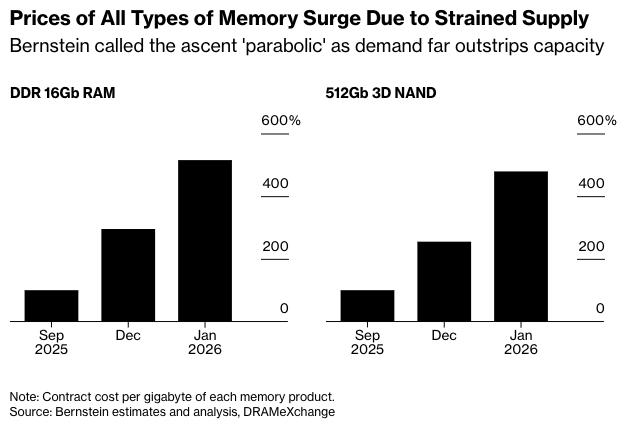
Rampant AI Demand for Memory is Fueling a Growing Chips Crisis
A Global Food Price Shock Looms as Middle East War Rages On
Scientists Detect a Sudden Acceleration in Global Warming
China’s Middle East Ties Go Far Beyond Iran
Economic Power is Returning to the Physical Realm
An Exodus of Money Endangers Wall Street’s Private-Credit Craze
This week from BlackSummit
The BlackSummit Team
The BlackSummit Team
Image of the Week
Bloomberg
Video of the Week
Will Putin Be the Real Winner in the Iran War?
The Economist
