
Global Market News
Global Equities Make Gains
Global equities made gains this week, nearing all-time highs. The S&P 500 and Nasdaq rose 1.57% and 1.88%, respectively, and the Dow Jones gained 2.32% on the week. The U.S. 10-year Treasury note declined slightly to 4.17%, while the price of a barrel of West Texas Intermediate crude oil increased about 2.5% to end the week at $58.77. Volatility, as measured by the CBOE Volatility Index, decreased over the week, closing Friday at 14.49.
Labor Market Slows, Fed Stays in the Spotlight
The U.S. economy added 50,000 jobs in December, missing forecasts of 70,000. The unemployment rate edged down to 4.4%, while prior payrolls were revised lower by 76,000. These figures point to a steady but subdued labor market, likely keeping the Fed on hold this month, with markets eyeing a rate cut by mid-2026. As we begin the year, the Fed faces mounting challenges — from safeguarding its independence amid political pressure to managing a $6.6 trillion balance sheet and reforming its monetary policy framework — all of which could shape its next moves.
International Developments
Maduro Captured as U.S. Unveils Sweeping Venezuela Transition Plan
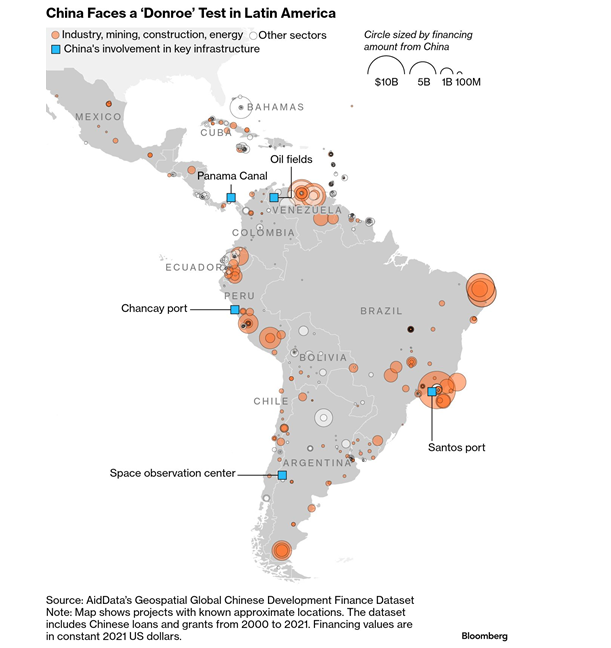
Last weekend, U.S. forces launched a large-scale military operation in Caracas, bombing key sites and storming President Nicolás Maduro’s heavily fortified compound. They succeeded in capturing Maduro and his wife, Cilia Flores, and flew them to the United States to face narco-terrorism and cocaine-trafficking charges in federal court in New York. President Trump announced that the U.S. would “run” Venezuela for an unspecified duration and hinted at potential follow-up strikes—though he later called off a second wave—claiming the interim government, led by former Vice President Delcy Rodriguez, is cooperating. Amid that backdrop, the Trump administration revealed sweeping plans on Thursday regarding Venezuela’s oil sector and political transition: Energy Secretary Chris Wright confirmed that U.S. authorities will selectively lift sanctions to market Venezuelan oil, with proceeds deposited into U.S.-controlled accounts for the benefit of both American and Venezuelan people, while Secretary of State Marco Rubio outlined a three-phase strategy involving economic stabilization, reintegration of international energy firms, and political reconciliation with released opposition figures. Trump emphasized that U.S. oversight could last for years as officials seek control over Venezuela’s state oil company. Fueling further leverage, Rubio cited recent U.S. seizures of Venezuelan tankers as a quarantine meant to pressure the interim government. Meanwhile, Venezuela’s national oil company acknowledged active negotiations with the U.S. but refrained from confirming specific details. Domestic reactions in the U.S. split along party lines, and energy firms expressed reservations about reentering Venezuela amidst ongoing policy volatility.
Iran Faces Escalating Protests Amid Crackdown and Internet Blackout
Iranian authorities shut down internet access nationwide as anti-government protests intensified, driven by economic hardship and political repression. Despite President Masoud Pezeshkian’s attempts to calm unrest with economic concessions, demonstrators continue demanding regime change. Security forces have responded violently, with over 42 deaths and 2,000 arrests reported since protests began on December 28. Supreme Leader Ali Khamenei vowed not to back down, while opposition figure Reza Pahlavi urged further demonstrations. The U.S. warned Iran of consequences if protesters are killed.
China-Japan Tensions Escalate Amid Beijing’s New Export Curbs
This week, China-Japan tensions deepened as Beijing imposed new export curbs on unspecified dual-use technologies bound for Japan, citing military-use concerns, and launched an anti-dumping investigation into a semiconductor material. Tokyo condemned the restrictions as “absolutely unacceptable” and contrary to international norms, accusing China of targeting Japan alone. The moves follow Japan’s own expanded export controls last year and come amid worsening relations since Prime Minister Takaichi Sanae suggested in November that a Chinese invasion of Taiwan could trigger a Japanese military response.
US Social & Political Developments
U.S.–Denmark Clash Over Greenland Sparks NATO Warning
This week, tensions flared between the United States and Denmark over Greenland after reports that Secretary of State Marco Rubio told lawmakers the U.S. seeks to purchase the island rather than invade it, though other officials, including White House Deputy Chief of Staff Stephen Miller, refused to rule out military intervention. The White House press secretary reinforced that acquiring Greenland is a “national security priority” and said all options remain on the table. Washington’s interest in Greenland stems from its strategic location in the Arctic and vast natural resources, including rare earth minerals and energy reserves. Danish Prime Minister Mette Frederiksen strongly rejected President Trump’s threats, warning that an invasion would spell the end of NATO. In response, leaders of seven NATO countries issued a joint statement affirming that decisions about Greenland rest solely with Denmark and Greenland.
FBI Investigates ICE Shooting in Minneapolis as Protests Spread Nationwide
The FBI has launched an exclusive investigation into the fatal shooting this week in Minneapolis, where ICE Agent Jonathan Ross shot 37-year-old Renee Nicole Good during a federal immigration operation. U.S. Homeland Security Secretary Kristi Noem asserts the victim attempted to ram her vehicle into agents, labeling it an “act of domestic terrorism,” while Minneapolis Mayor Jacob Frey dismissed this narrative and contested the claim of self-defense, noting video evidence contradicts federal accounts. In response to the shooting, protests erupted both in Minneapolis—where demonstrators have blocked streets, clashed with federal agents using tear gas and pepper balls, and called for ICE’s removal from the city—and in other U.S. cities, including Charlotte, San Diego, and New York, with hundreds participating in rallies and vigils. Minnesota Governor Tim Walz authorized National Guard deployment to support law enforcement as tensions escalate and protesters demand accountability.
Corporate/Sector News
Chevron In Talks With White House For Expanding Venezuela Operating License
Chevron is advancing talks with the U.S. government to broaden its sanctions-exempt license, aiming to restore Venezuelan crude exports to prior levels. Chevron, the only U.S. oil major currently operating in Venezuela, saw its export volumes decline from roughly 250,000 barrels per day to about 100,000 bpd after tighter restrictions in July; the expanded license would restore prior output levels and potentially open involvement of other U.S. firms. The company has recalled staff and recently shipped 300,000 barrels of heavy crude to the U.S. Gulf Coast, signaling a ramp-up in activity. Meanwhile, global traders like Vitol and Trafigura are vying for access as Washington explores wider participation. The proposed framework would keep proceeds under U.S. oversight, funding American goods for Venezuela while limiting PDVSA’s (Venezuela’s national oil company) direct revenue.
Warner Bros. Rejects Paramount’s $30 Bid, Sticks With Netflix Deal
Warner Bros. Discovery has once again rebuffed Paramount Skydance’s hostile takeover bid, with its board unanimously declaring the all-cash $30-per-share offer—backed by Larry Ellison—to be “inferior” due to excessive debt risk and uncertainty, and urging shareholders to uphold the existing merger agreement with Netflix valued at $27.75 per share in cash and stock. The board cited Paramount’s proposed leveraged buyout structure, potentially the largest in history with about $87 billion in debt, as more risky than the Netflix deal, which they say offers superior value, greater certainty, and fewer financial burdens. Netflix co-CEOs Ted Sarandos and Greg Peters supported WBD’s position, emphasizing the merger’s benefits for shareholders, consumers, creators, and the broader entertainment industry.
Glencore-Rio Tinto Merger Back on the Table Amid Sector Consolidation
Glencore and Rio Tinto have resumed preliminary merger discussions nearly a year after talks fell apart, exploring an all-share transaction that could form the world’s largest mining company, with a combined valuation in the $200–$260 billion range. Glencore confirmed the renewed discussions, noting they may involve merging some or all of their businesses, while Rio Tinto, with a market cap of around $140 billion, is expected to either declare a firm offer or walk away by February 5. If completed, the deal would follow rising sector consolidation, including the recent Anglo American-Teck Resources merger.
Recommended Reads
Trump’s Ouster of Maduro Shows America’s New World Order Is Here
The White House weighs how to acquire Greenland
An AI revolution in drugmaking is under way
The Fed’s Six Big Challenges in 2026
This week from BlackSummit
Geopolitical Derivatives and the Markets: It Started With a Bang; Where Does it Go From Here?
John E. Charalambakis
The BlackSummit Team
The FACS Team
Image of the Week
Video of the Week
Trump invokes Monroe Doctrine in Maduro capture
Source: DW News
