
Global Market News
Global Equities Make Gains
Global equities made gains this week as geopolitical tensions eased. The S&P 500 and Nasdaq ended the week up 3.44% and 4.25%, respectively, and the Dow Jones rose 3.82% on the week. The U.S. 10-year Treasury note dropped several basis points to 4.27%, while the price of West Texas Intermediate crude oil declined sharply to $65.13 per barrel. Volatility, as measured by the CBOE Volatility Index, decreased more than 20% over the week, closing Friday at 16.32.
Fed Hints At Rate Cuts
Though the Federal Reserve kept interest rates unchanged at the June meeting, Fed Governor Christopher Waller was the first to suggest a possible interest rate cut as early as July, contingent on continued low inflation, while Vice Chair Michelle Bowman echoed the same shortly after. Fed Chair Jerome Powell avoided committing to a specific timeline, but he acknowledged that most FOMC members anticipate rate cuts later this year, especially if inflation falls further or the labor market weakens. Meanwhile, President Donald Trump criticized the Fed for not lowering rates and hinted at replacing Powell, fueling speculation that an early replacement may happen in September or October and contributing to a sharp drop in the dollar against the euro.
International Developments
Trump Secures NATO Spending Win Amid Alliance Uncertainty
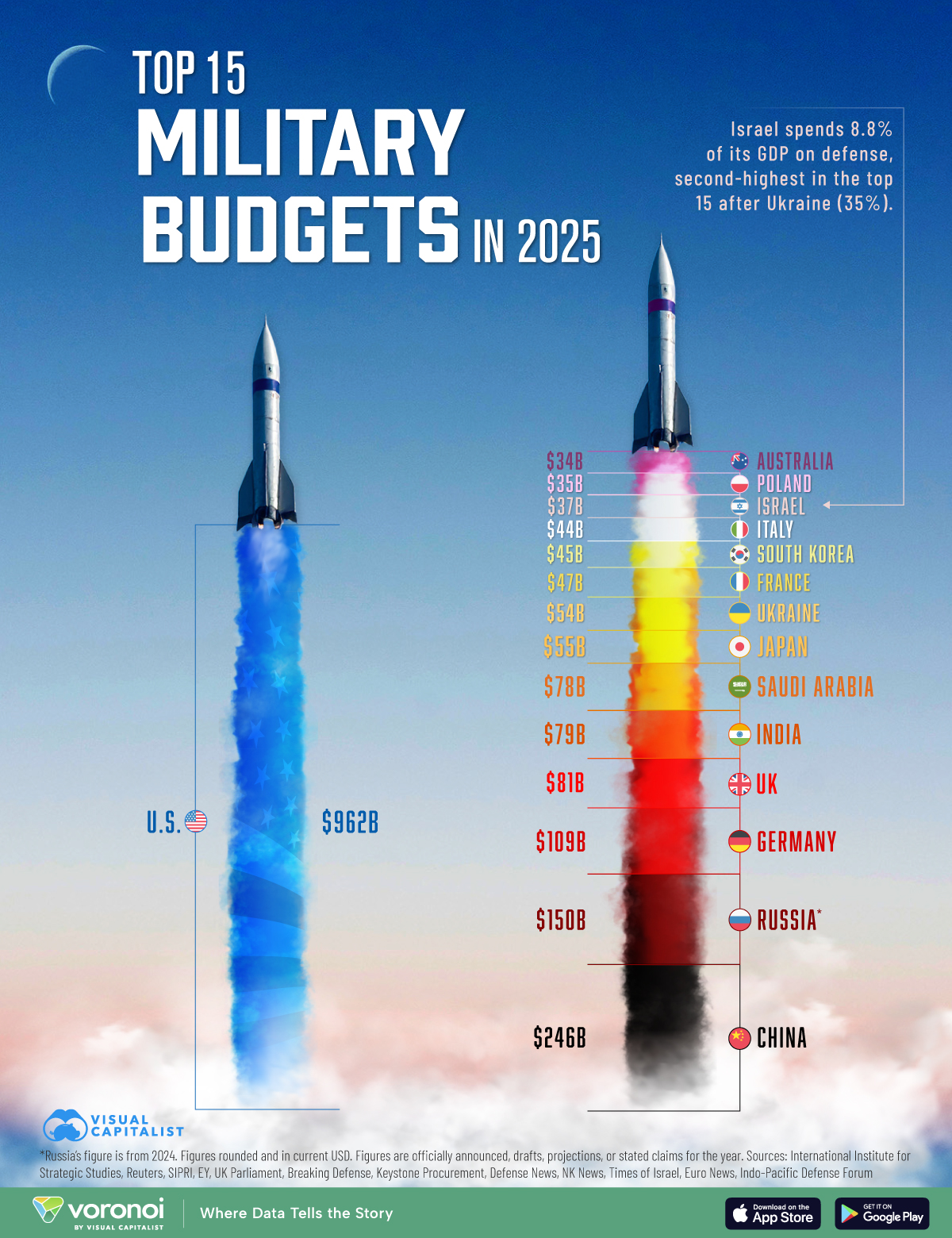
At the June 25th NATO summit in The Hague, leaders pledged to raise defense spending to 5% of GDP within a decade—more than doubling the current 2% target—in a major concession to U.S. President Donald Trump. While NATO Secretary-General Mark Rutte credited Trump for the breakthrough, concerns mounted after Trump, speaking aboard Air Force One, hedged on his commitment to Article 5, NATO’s collective defense clause. The summit’s shortened communiqué and low-profile treatment of Ukraine signaled European efforts to avoid conflict with Trump while quietly managing diverging strategic priorities.
U.S.-Israel Strikes Cripple Iran’s Nuclear Sites, But Fallout Clouds Future
Early this week, the U.S., Israel, and Iran agreed to a cease-fire following nearly two weeks of intense strikes, including U.S. bunker-buster attacks on Iran’s Fordow facility near Qom and Israeli hits on key sites at Natanz and Isfahan, causing major destruction and killing at least a dozen scientists. Though the operations—dubbed Midnight Hammer and Rising Lion—severely damaged Iran’s nuclear infrastructure, a leaked U.S. intelligence report suggests they delayed Iran’s breakout timeline by only a few months. In response, Iran’s parliament slashed cooperation with the IAEA, potentially withdrew from the Nuclear Nonproliferation Treaty, and may now rebuild its program underground, raising the risk of a covert nuclear resurgence.
Russia Captures Key Lithium Site, Undermining U.S.-Ukraine Minerals Pact
Russian forces have seized the 100-acre Shevchenko lithium deposit in Donetsk, threatening the viability of a newly signed U.S.-Ukraine minerals agreement aimed at reducing reliance on Chinese critical minerals. The deposit—one of Ukraine’s richest in spodumene ore—was to be developed under a joint investment framework granting Washington priority access to Ukraine’s mineral wealth, but now risks falling under Russian state-controlled interests like Rosatom. As Kyiv loses ground and mineral assets to Moscow’s summer offensive, U.S. officials face mounting challenges in leveraging Ukraine’s subsoil resources without committing additional military support.
US Social & Political Developments
Trump Halts Canada Trade Talks Over Digital Tax Dispute
Yesterday, President Donald Trump announced the immediate suspension of trade negotiations with Canada in response to its 3% digital services tax, which is retroactively set to collect an estimated $2.7 billion from U.S. tech companies starting July 1st. Trump called the tax a “blatant attack” and vowed to impose new duties on Canadian imports within seven days, intensifying trade tensions between the two nations. The move comes just weeks before broader U.S. tariff hikes are expected, casting uncertainty over the timeline of a new bilateral trade agreement initially targeted for July 20th.
GOP Megabill Hit by Senate Rule Cuts to Key Tax Provisions
A Senate deal on President Trump’s “big beautiful bill”—a sweeping tax, spending, and policy package—is approaching the president’s July 4th deadline. This week, Senate Parliamentarian Elizabeth MacDonough struck multiple tax-related provisions from Republicans’ sweeping domestic policy megabill in Washington, D.C., including a religious school carveout from an endowment tax hike and regulations on guns. Also removed were provisions targeting improper Earned Income Tax Credit payments and penalties for leaking taxpayer data, totaling a modest fiscal impact but threatening key GOP support. Democrats continue to challenge remaining sections—such as Opportunity Zones and clean energy credits for foreign entities—as part of the Byrd Bath process governing reconciliation bills, which are limited to budget-related items and exempt from filibuster.
Corporate/Sector News
Shell Explores Historic $80B+ Acquisition of BP Amid Strategic Realignment
On June 26th, Shell was reported by the Wall Street Journal to be in early-stage talks to acquire BP, a potential $80+ billion deal that could become the largest oil merger since ExxonMobil’s 1999 formation. While Shell publicly denied active discussions under U.K. takeover rules, market activity and insider reports suggest both sides have engaged bankers and are weighing strategic advantages, including overlapping Gulf of Mexico operations and Shell’s $200+ billion market strength. The deal would reshape the energy sector, coinciding with BP’s pivot back to fossil fuels—cutting renewables investment by over 50%—and Shell’s rollback of green energy targets in favor of core oil and gas production.
China Confirms Trade Breakthrough on Export Controls
Friday, China’s Ministry of Commerce confirmed a trade framework with the Trump administration to ease tensions, including China expediting exports of rare earth minerals to the U.S. and the U.S. lifting recent restrictions on exports of ethane, jet engines, and chip software to China. The announcement follows bilateral meetings in London (June 9–10) and Geneva (May), and marks a policy shift after months of tariff escalations and stalled shipments. While China dominates global rare earths supply, this deal—potentially involving billions in trade—aims to stabilize economic ties, with U.S. Commerce Secretary Howard Lutnick stating controls will be removed “once China delivers.”
NTSB Blames Boeing for 737 Max Door Plug Blowout, Cites Systemic Safety Failures
This week, the National Transportation Safety Board (NTSB) concluded that Boeing’s inadequate training, missing documentation, and oversight failures led to the January 5, 2024 door plug blowout on Alaska Airlines Flight 1282, which occurred near Portland, Oregon. Investigators revealed that four bolts were never reinstalled on the aircraft—delivered in October 2023—and that only one of 24 Renton factory workers had prior experience with the procedure, highlighting Boeing’s reliance on undertrained staff. The FAA also came under scrutiny, prompting increased oversight and a production cap of 38 jets per month, while Boeing’s leadership pledged ongoing reforms amid a broader safety reckoning.
Corporate Profile
Nvidia Eyes Cloud Dominance as AI Demand Drives $4 Trillion Ambition
Nvidia, already the world’s most valuable company at $3.8 trillion as of June 27th, is reshaping its future by expanding beyond chips into cloud computing through DGX Cloud, projected by UBS to become a $10+ billion annual business. While still supplying ~80% of the world’s AI chips—including to Amazon, Microsoft, and Google—it now also leases its own cloud infrastructure, challenging those very clients and investing in rivals like CoreWeave and Lambda. With $10.9 billion in multi-year cloud service agreements (up from $3.5B last year), growing AI infrastructure demand, and a potential $6 trillion valuation forecasted by Loop Capital, Nvidia is leveraging its pricing power and AI monopoly to become the cornerstone of next-generation computing.
Recommended Reads
Three years left to limit Earth’s warming to 1.5C, leading scientists warn
Iran War Reflects a Changed Middle East and a New Israeli Military Doctrine
AI is turning the ad business upside down
Has Putin pushed the Russian economy to the brink?
Social Security, Key Medicare Fund, to Run Out Sooner Than Previously Forecast
This week from BlackSummit
Iran and the Day After: Peace, Covert Martyrdom Scenarios, and Potential Market Outcomes
John E. Charalambakis
BlackSummit Team
Image of the Week
Video of the Week
The future of our diplomatic service is uncertain
Source: American Foreign Service Association
