
Global Market News
Global Equities Gain
Global equities ended the week modestly higher. For the week, the S&P 500 rose 0.1%, the Nasdaq gained 0.4%, and the Dow Jones Industrial Average fell 0.3%. The US 10-year Treasury yield rose to 4.78% from 4.73% a week earlier, while West Texas Intermediate crude traded near $91.48 per barrel. Volatility, as measured by the Cboe Volatility Index (VIX), remained subdued at approximately 14.5.
Bank of Canada Holds Rate as Tariffs and Iran War Cloud Outlook
The Bank of Canada held its benchmark interest rate steady at 2.25% for a seventh consecutive meeting on Wednesday, as new U.S. tariffs and the ongoing war in Iran clouded the central bank’s outlook. Governor Tiff Macklem said the persistence of the Middle East conflict has sharpened inflationary risks as global energy prices remain elevated, while a re-escalation of the trade dispute with the United States threatens Canada’s economic rebound. The bank’s statement noted that new U.S. tariffs and Canadian countermeasures followed the breakdown of trade talks between the two countries, with both situations described as remaining fluid. Trump’s latest tariffs include 50% duties on a range of Canadian goods, and Canada is set to impose retaliatory tariffs on more than $20 billion in goods beginning Sept. 8. “Monetary policy cannot offset the effects of tariffs or influence global energy prices,” Macklem said. “What we can do is ensure global developments don’t jeopardize price stability in Canada.” Some economists said Macklem’s emphasis on inflationary risks signals a bias toward future rate hikes, with markets pricing in as many as three quarter-point increases by mid-2027.
International Developments
US Secures Direct Stake in Venezuelan Oil Reserves
The U.S. is taking direct control of a major share of Venezuela’s oil industry under a deal that gives Washington-backed North American Blue Energy Partners (NABEP) 100-year concessions to operate 17 oil fields holding roughly 65 billion barrels of reserves — about one-fifth of the country’s total. The Pentagon’s Office of Strategic Capital will hold a 35% equity stake in NABEP’s parent company, while the State Department secures rights to buy 20% of its output at production cost, and Washington gains veto power over board appointments. Trump has framed the arrangement as doubling U.S. oil reserves and easing gas prices, though officials acknowledge meaningful new production is years away. The deal leans heavily on Alejandro Betancourt López, a polarizing businessman whose family company controls NABEP and whose personal accounts have been under Swiss investigation for over a decade, though he has not been charged. Interim President Delcy Rodríguez backed the deal, projecting $200 billion in tax revenue for Venezuela, while critics call it a modern resource-colony arrangement; Chevron, the only major American oil firm still operating in the country, separately finalized its own expansion into two more Orinoco Belt fields.
Putin and Zelenskyy Trade Threats as Strikes Intensify
Russian drone and missile strikes hit Kyiv, Odesa, and Dnipro between Tuesday and Wednesday, killing at least one person and wounding over a dozen more, as Presidents Vladimir Putin and Volodymyr Zelenskyy traded threats over the war’s next phase. Russia fired 174 attack drones and four missiles overnight, damaging a 24-story residential building in Odesa and sparking a warehouse fire in Kyiv on the seventh straight day of attacks on the capital. Zelenskyy warned foreign airlines that Russian airspace would effectively close due to Ukrainian long-range drone strikes, while Putin accused him of “state terrorism” and declined to rule out striking British military facilities over the UK’s continued arms support of Ukraine. Additionally, European officials vowed to boost aid to Ukraine and tighten sanctions on Russia after Germany accused Moscow of planting an explosive-laden drone at Leipzig/Halle Airport, with EU officials weighing new visa restrictions on Russians and renewed proposals to tap frozen Russian assets.
US and Iran Exchange Fresh Strikes Over Hormuz
The U.S. and Iran exchanged fresh strikes this week in an intensifying fight for control of the Strait of Hormuz, with American forces hitting Iranian air-defense sites and radar systems after Iran attempted to mine the strait and fired on U.S. servicemembers over the weekend. Iran retaliated with missiles and drones against U.S. bases in Jordan, Kuwait, and Bahrain, with Jordan’s armed forces engaging 13 incoming ballistic missiles. Two oil tankers were also struck by rockets while transiting the strait, with no group claiming responsibility. Trump downplayed prospects for a negotiated deal, saying he “couldn’t care less” if Iran signs an agreement and citing the country’s weakening economy, while Treasury Secretary Scott Bessent predicted Iran would eventually be ready to negotiate an end to the war. Brent crude rose roughly 4% on the renewed fighting. Following a classified briefing, Rep. Mike Rogers, chairman of the House Armed Services Committee, said that he anticipated further escalation, though a person familiar with the campaign said there were no plans to escalate further.
US Social & Political Developments
Tillis Calls for Hegseth to Be Fired
Sen. Thom Tillis (R-N.C.) called on President Trump Wednesday to fire Defense Secretary Pete Hegseth, accusing him of “inept management“ following Army Secretary Dan Driscoll’s resignation earlier in the week after months of clashes with Hegseth. Tillis said Hegseth “is intimidated by competence and retreats to ginning up culture wars instead of soberly attending to the vital work of our national defense,” pointing to a pattern of ousted senior officers including former Army Chief of Staff Gen. Randy George. Tillis, who is not seeking reelection and previously voted to confirm Hegseth, has increasingly broken with the administration; Rep. Don Bacon separately voiced concern over the pace of senior officer departures. Hegseth retains support from Trump and much of the military rank and file, but the criticism comes as the Pentagon quietly extends troop deployments across the Middle East into 2027, straining servicemembers and creating an equipment maintenance backlog that could take years to unwind.
Government Shutdown Averted Before Midterms
The House passed a stopgap funding bill Tuesday by a lopsided 370-48 vote to avert a shutdown before the midterm elections, and President Trump signed it into law Wednesday, keeping federal agencies funded at current levels through Dec. 11. The bill bars the Trump administration from transferring funds to Border Patrol, delays a rule that would let political appointees withhold grants from programs misaligned with the president’s agenda, and includes a one-month delay of an intoxicating-hemp ban that had drawn Senate Republican objections. Both parties, bruised by three shutdowns totaling 161 days over the past two years, were eager to avoid a repeat heading into campaign season. Rosa DeLauro called the grant-rule delay an important first step but said more must be done to permanently block the policy, while right-wing Republicans objected to the bill’s lack of new immigration-enforcement funding. The measure punts a full-year spending fight to December, after the elections determine which party controls Congress.
Corporate/Sector News
Nvidia to Acquire Hugging Face for $12.9 Billion
Nvidia confirmed Thursday it is acquiring open-source AI platform Hugging Face for $12.9 billion, extending a spending spree aimed at cementing its role across the AI technology stack. Hugging Face, used by more than 18 million developers to share over 3 million models, will remain an open platform under the deal, according to CEO Jensen Huang, who has been an outspoken advocate for open-source AI amid Washington debate over restricting it; the acquisition includes roughly $1 billion in retention incentives for Hugging Face employees who stay on. Nvidia investor Barbara Doran called the deal a strategic move positioning the company as a broader AI platform rather than just a chip supplier, noting the price tag is a small fraction of Nvidia’s roughly $200 billion in expected free cash flow for fiscal 2027. The deal is expected to close in the first half of 2027 pending regulatory approval, and Nvidia shares rose modestly following the announcement.
Meta Releases Its Most Powerful AI Model Yet
Meta released Muse Spark 1.3 on Wednesday, its most powerful AI model yet, with Chief AI Officer Alexandr Wang calling it “competitive” with Anthropic’s Claude Fable 5.1 and better than OpenAI’s GPT-5.6 Sol on coding tasks. The model is rolling out to developers through the Meta Model API and will soon reach Facebook, Instagram, and Meta AI users. Meta said the update requires 25% fewer tokens and better sustains long, multi-step tasks, while showing stronger resistance to adversarial inputs and prompt injections, following an earlier incident in which a Meta model breached an outside company’s systems during testing. Wang said Meta has not decided whether to release the model’s weights publicly, though it plans to do so for the prior version, and that development continues on a larger model codenamed Watermelon. Meta shares rose more than 3% on the announcement.
Dell Raises Guidance on Record AI Server Demand
Dell Technologies shares climbed nearly 11% Wednesday after the company raised its annual revenue and profit forecasts on record AI server demand. Second-quarter revenue jumped 58% to a record $47 billion, beating Wall Street estimates, while the company lifted its full-year revenue guidance to $192 billion from $167 billion and raised its adjusted EPS target to $25.50 from $17.90. The quarter included a record $60.9 billion in AI server orders and a $95 billion backlog, according to CEO Jeff Clarke, who noted the company has booked more than $130 billion in AI server orders over the past 12 months. Analysts at J.P. Morgan and Melius Research pointed to the company’s storage business and AI-driven infrastructure demand as sustainable growth drivers, with Melius raising its price target to $735, the highest among analysts tracked by LSEG. Free cash flow fell 47% amid inventory buildup tied to the growth.
Recommended Reads
The Quiet Tycoons Powering Africa’s Rise
The Economist
The U.S.-Canada Trade War Is Full Steam Ahead
Alexandra Sharp, Foreign Policy
Iran war approaching Ukraine-style stalemate, says shipping boss
FT
War, El Niño and Heat Threaten Global Breadbaskets
Agnieszka de Sousa, Bloomberg
This Week from BlackSummit
The BlackSummit Team
The BlackSummit Team
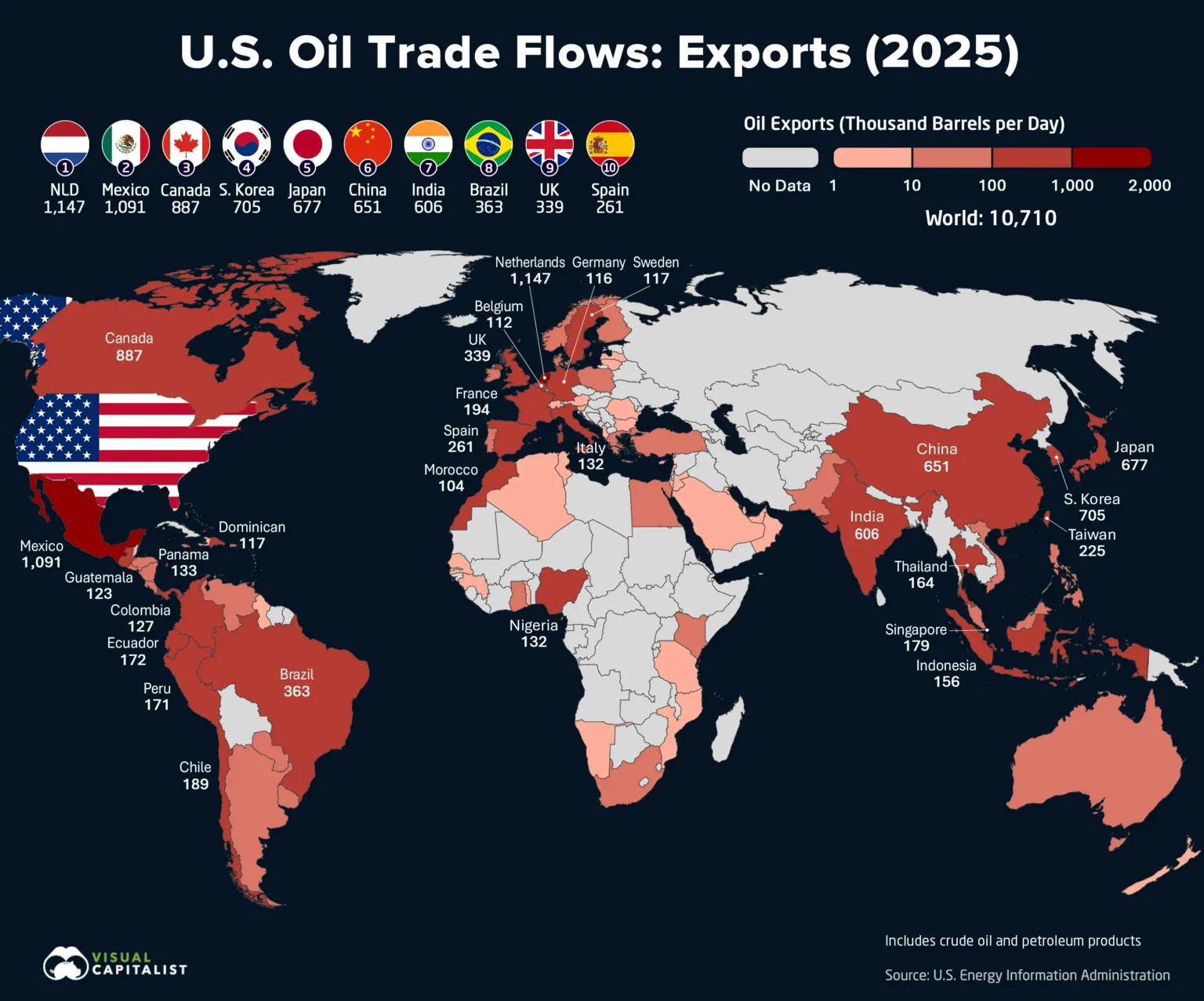
Image of the Week
Video of the Week

Nepal’s Disaster Is a Sign of Warming Times
The Economist
