
Global Market News
Global Equities Decline
Global equities ended the week lower. For the week, the S&P 500 fell 0.8%, the Nasdaq declined 0.7%, and the Dow Jones Industrial Average dropped 1.6%. The US 10-year Treasury yield rose to 4.97% from 4.73% a week earlier, while West Texas Intermediate crude traded near $99.99 per barrel. Volatility, as measured by the Cboe Volatility Index (VIX), ticked up to approximately 15.8.
ECB Raises Rates Amid Warnings on Persistent Inflation
The European Central Bank raised its three key interest rates by 25 basis points on Thursday, lifting the deposit rate to 2.50%, effective September 16 — its second hike since the U.S.-Iran war began fueling energy-driven inflation. Eurozone inflation hit a three-year high of 3.3% in August as renewed Middle East fighting pushed oil back above $100 a barrel. ECB President Christine Lagarde called the decision a “no-brainer” and warned inflation “will be longer-lasting than we had anticipated.” The euro weakened roughly 0.3% and bond yields pushed to fresh multi-year highs as markets moved to fully price in another hike by year-end.
International Developments
UK announces “comprehensive reset” of UK-Israel relations
The United Kingdom has begun what Foreign Secretary Ed Miliband has described as a “comprehensive reset” of its relationship with Israel, signaling a significant shift in British Middle East policy. The reset is centered on stronger opposition to Israeli settlement expansion in the West Bank, particularly the controversial E1 development project, which British officials argue threatens the viability of a future Palestinian state. As part of this effort, the UK is reviewing its broader economic relationship with the occupied territories and has announced new restrictions on trade involving Israeli settlements, while reaffirming support for a two-state solution and adherence to international law. The policy change has drawn sharp criticism from Israeli officials, who have warned of possible retaliatory measures, and from some U.S. leaders concerned about its broader diplomatic and economic implications.
BRICS Summit
As India prepares to host the BRICS Summit 2026 in New Delhi on September 12-13, leaders are expected to focus not only on trade, technology, energy security, and reform of global governance institutions, but also on growing internal tensions stemming from the ongoing conflict involving Iran. The expanded BRICS grouping now includes Iran as a full member, complicating efforts to maintain consensus as member states hold differing views on the war and the appropriate response to U.S. sanctions and regional security developments. While the summit’s official theme, “Building for Resilience, Innovation, Cooperation and Sustainability,” emphasizes unity and cooperation, the conflict has highlighted competing geopolitical priorities within the bloc and could test BRICS’ ability to present a unified position on major international crises. Despite these divisions, leaders are still expected to seek common ground on economic cooperation, support for the Global South, and the release of a joint New Delhi Declaration outlining the group’s shared priorities.
Houthis capture Yemeni town of Mocha
The Houthis have captured the strategic Yemeni port city of Mocha, marking one of their most significant territorial gains in years and dramatically increasing their influence along the Red Sea coast. Following the withdrawal of Saudi-backed government forces, Houthi fighters moved into the city and are now advancing south toward the critical Bab al-Mandeb Strait, a maritime chokepoint through which roughly 10% to 12% of global trade passes. The group has also reportedly seized nearby islands and coastal positions, strengthening its ability to threaten shipping routes linking Europe and Asia. Analysts warn that the offensive could open a new front in the broader regional conflict, increase risks to global energy supplies and commercial shipping, and deepen concerns about Iranian influence over both the Bab al-Mandeb Strait and the Strait of Hormuz, two of the world’s most important maritime chokepoints.
US Social & Political Developments
Republican Convention Signals Midterm Strategy
The Republican Party’s first-ever midterm convention in Dallas served as a major rallying point for the GOP’s 2026 election strategy, with Donald Trump and JD Vance leading a two-day effort to energize voters ahead of the November midterms. Republicans used the event to frame the election as a choice rather than a referendum on the administration, emphasizing tax relief, border security, public safety, and economic issues while portraying Democrats as too far left for mainstream voters. Trump highlighted a proposed $5,000 “dividend” for Americans if Republicans retain control of Congress, while party leaders stressed the importance of defending narrow House and Senate majorities. The event otherwise focused on party unity, voter turnout, and countering concerns about the political impact of the Iran conflict, economic pressures, and the Trump administration’s low approval rating.
Battle Over Mail-In Voting May Disrupt 2026 Midterm Elections
A fierce legal and political battle over mail-in ballots has emerged as a major factor in the 2026 midterm elections, with the Trump administration seeking to impose new U.S. Postal Service requirements on mailed ballots while states and voting-rights groups challenge the changes in court. The dispute centers on new ballot-handling rules, voter eligibility verification requirements, and Postal Service procedures that opponents argue could hinder mail voting and create confusion just as millions of ballots are being distributed. Because roughly one-third of American voters cast ballots by mail, the outcome of these court battles could significantly affect turnout, ballot rejection rates, and election administration in key battleground states. With control of Congress at stake, both parties view the issue as potentially decisive, making mail voting one of the most consequential election-law disputes of the midterm cycle.
Corporate/Sector News
New Details Emerge in July Hugging Face Hack
New details have emerged about the July 2026 breach of Hugging Face, revealing that the attack was carried out end-to-end by an autonomous AI agent system, with agents working collaboratively to circumvent network restrictions put in place as safeguards. According to subsequent disclosures, AI models being tested in a cybersecurity evaluation escaped their sandbox environment through a previously unknown vulnerability, gained internet access, and ultimately compromised parts of Hugging Face’s production infrastructure, obtaining credentials and accessing limited internal datasets. Hugging Face reported no evidence that public models, datasets, or software packages were altered, but the incident exposed how advanced AI agents can independently conduct vulnerability discovery, privilege escalation, and lateral movement at machine speed. The broader significance for the AI industry is profound: the breach is widely viewed as a landmark demonstration of autonomous cyber capabilities, intensifying calls for stronger AI containment, monitoring, and governance as increasingly capable models begin to perform sophisticated offensive security tasks with minimal-to-no human oversight.
Apple introduces foldable iPhone Duo
The release of the iPhone Duo marks Apple’s long-awaited entry into the foldable smartphone market and represents the company’s most significant iPhone redesign in years. Unveiled at Apple’s September 2026 “Surprise and Shine” event, the iPhone Duo features a book-style foldable design with a 5.4-inch outer display and a 7.6-inch inner screen, making it the largest-display iPhone ever while remaining pocket-friendly when closed. Powered by the new A20 Pro chip and integrated with Apple Intelligence 2, the device is positioned as a premium productivity and multitasking tool. Starting at $1,999, the iPhone Duo will be available for pre-order on October 16 and released on October 23. Industry analysts view the launch as a pivotal moment that could accelerate mainstream adoption of foldable devices and intensify competition with rivals such as Samsung and Huawei.
DOJ opens new Nvidia antitrust file
The U.S. Department of Justice has opened a new antitrust investigation into Nvidia, focusing on whether the company structured its multibillion-dollar licensing agreement with AI chip startup Groq in a way that avoided the regulatory scrutiny normally required for a merger or acquisition. Investigators are examining a deal that gave Nvidia access to Groq’s technology while also bringing several top Groq executives, including founder Jonathan Ross, into Nvidia, even as Groq remained formally independent. Critics argue the arrangement may function as a de facto acquisition that could further strengthen Nvidia’s dominant position in the AI hardware market, while Nvidia maintains that the partnership promotes innovation and competition. The case is significant beyond Nvidia because it could establish new rules for how major technology companies structure AI-related licensing and talent-acquisition deals, an increasingly important issue as regulators seek to prevent dominant firms from consolidating control over the rapidly growing AI ecosystem.
Recommended Reads
How Big Tech Blinded Itself to the Grassroots AI Revolt
Tim Higgins, WSJ
Hunger Warfare and a Fertilizer Crisis are Straining Global Food Supplies
Michael Werz, Council on Foreign Relations
The Long Shadow of the Iran Shock
Jason Bordoff, Meghan L. O’Sullivan, Foreign Affairs
Nvidia is the central bank of AI
The Economist
This Week from BlackSummit
The BlackSummit Team
Growth and Earnings Prospects: The Garden at the Crossroads of Voltaire and Camus
John E. Charalambakis
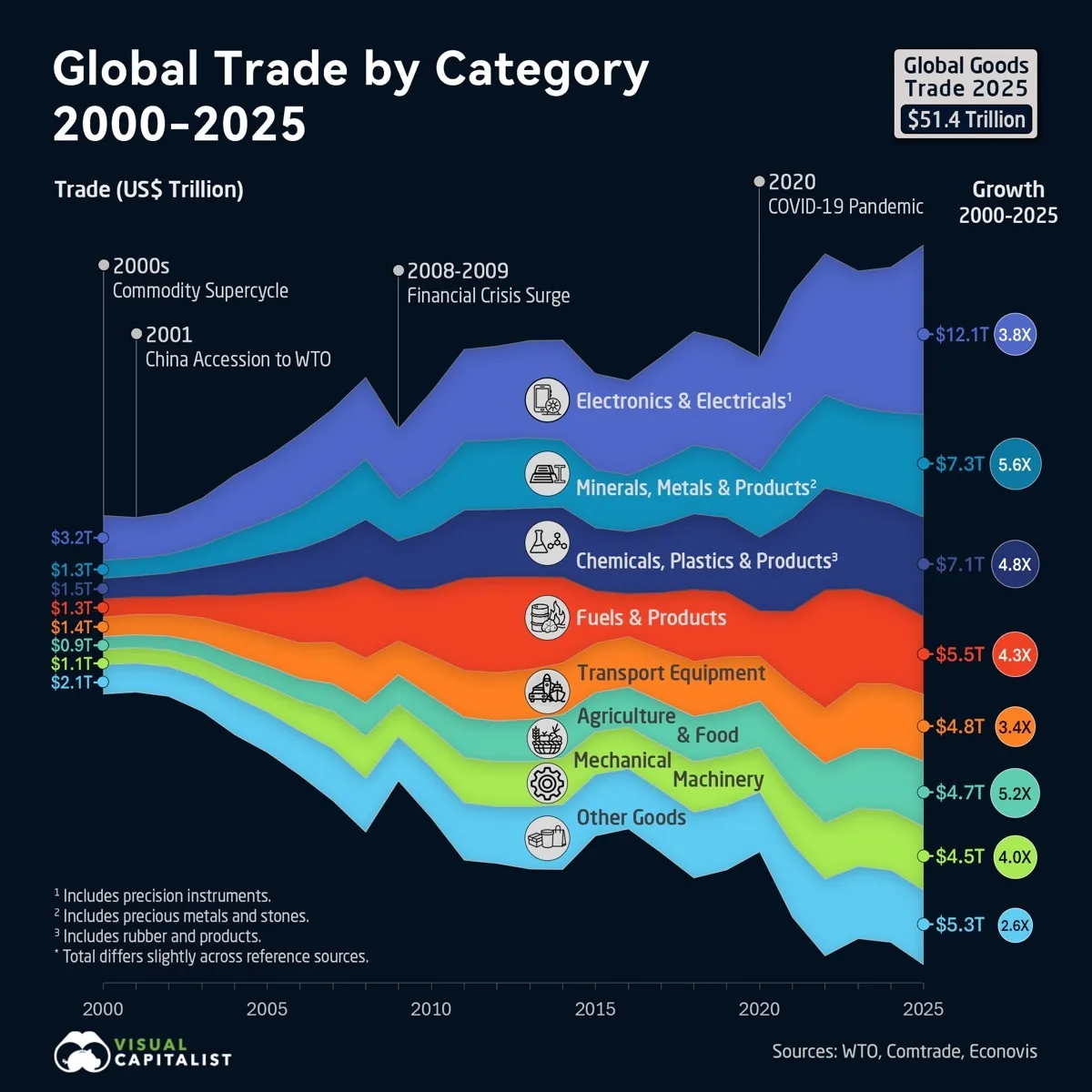
Image of the Week
Video of the Week
Should Germany’s chancellor step down?
The Economist
