
This Advent, we encourage you to support worthy causes that bring hope and healing to those in need by giving to organizations that we as a firm and as individuals support, such as Mercy Ships, Gifts to Children of Ukraine, and initiatives led by Nicholas Kristof. We wish you a blessed holiday season!
Global Market News
Global Equities Make Gains
Global equities made gains this week, extending their recovery. The S&P 500 and Nasdaq increased 0.31% and 0.91%, respectively, and the Dow Jones gained 0.50% on the week. The U.S. 10-year Treasury note rose several basis points to 4.14%, while the price of West Texas Intermediate crude oil also rose, closing Friday at $60.18 per barrel. Volatility, as measured by the CBOE Volatility Index, dropped significantly by nearly 15%, ending the week at 15.41.
Mixed Labor Signals Ahead of FOMC Rate Decision
The labor market outlook ahead of next week’s FOMC meeting is uncertain due to delayed official data, forcing the Fed to rely on mixed indicators. ADP reported a 32,000 drop in private-sector jobs for November, including a steep 120,000 decline at small businesses, while weekly jobless claims fell to their lowest level since September 2022, though likely skewed by holiday adjustments. Layoff data normalized in November after an October spike, and Canada’s job market remains strong, adding about 60,000 jobs monthly. Despite these conflicting signals, markets are pricing in a 95% chance of a quarter-point rate cut on Wednesday.
International Developments
Modi and Putin Deepen Ties Amid Global Tensions
Indian Prime Minister Narendra Modi and Russian President Vladimir Putin held their 23rd annual summit in New Delhi on Friday, focusing on strengthening trade, energy, and defense ties despite Western pressure over the Ukraine war. Some of the agreements concluded include promised economic cooperation through 2030, currency exchange, and mutual investments. Despite ever-warming relations with Russia, Modi is likely to continue attempting a balancing act between Washington and Moscow. With the purchase of Russian S-400 air defense systems and an option on Su-57 jets, India runs the risk of alienating the United States, which it considers a critical strategic and economic partner.
Ukraine-Russia Peace Talks Stall
A U.S. delegation, led by special envoy Steve Witkoff and Jared Kushner, met with Russian President Vladimir Putin in Moscow earlier this week to discuss a U.S.-drafted 28-point peace plan, which both sides called “positive” but failed to resolve core disputes. Putin described the talks as “challenging” and reaffirmed Russia’s refusal to compromise on territorial issues, citing recent battlefield gains, including the capture of Pokrovsk, as strengthening Moscow’s negotiating position. Meanwhile, Ukrainian officials met with NATO and EU delegates in Brussels, where discussions focused on using frozen Russian assets, largely held in Belgium, to fund Ukraine’s military. The European Commission proposed a €90 billion reparations loan, though Belgium remains opposed, and Russia warned such action could be considered a “casus belli.” European leaders also accused Putin of feigning interest in peace while consolidating leverage, underscored by the EU’s decision to impose a full ban on all Russian gas imports by 2027—a move aimed at severing Moscow’s energy lifeline and reducing its geopolitical influence.
Japan-China Tensions Deepen Over Taiwan
Tensions between Japan and China have escalated further since mid-November, when Japanese Prime Minister Sanae Takaichi suggested that Japan could respond to a Chinese attack on Taiwan. Despite clarifying that Japan’s stance on Taiwan remains unchanged since 1972, Takaichi has refused to retract her earlier remarks, prompting Beijing to dismiss her explanation as “far from adequate” and demand a full withdrawal. China has intensified its pressure campaign, sending formal letters to the UN accusing Japan of “reviving militarism,” staging its largest-ever maritime deployment with over 100 vessels near Taiwan and the Senkaku/Diaoyu Islands, and canceling 1,900 flights between China and Japan for December. Economic and cultural exchanges remain frozen, with seafood imports suspended and a travel advisory in place. Meanwhile, the U.S. continues its policy of strategic ambiguity publicly, though President Trump privately urged Takaichi to avoid provoking China while reaffirming Washington’s commitment to Japan’s defense. Taiwan, for its part, praised Takaichi’s stance and announced plans to deepen economic cooperation with Japan.
US Social & Political Developments
U.S. Unveils National Security Strategy to Focus More on Western Hemisphere Amid Continued Strikes in Caribbean
Thursday evening, the White House publicly released the administration’s 2025 National Security Strategy. Of particular note is the Trump administration’s pledge to deprioritize Europe and focus more on the Western Hemisphere. Throughout the Strategy is the addition of the “Trump Corollary” to the Monroe Doctrine, stating that the U.S. “will deny non-Hemispheric competitors the ability to position forces or other threatening capabilities, or to own or control strategically vital assets, in our Hemisphere.” This comes in the wake of more controversy from anti-cartel attacks in the Caribbean and South American Pacific. Secretary of War Pete Hegseth is alleged to have given a spoken directive to “kill everyone,” as a follow-up strike was used against initial survivors of an incapacitated cartel boat. Since the allegations, Admiral Frank “Mitch” Bradley, the commanding officer over the strikes, has been called to Washington for a closed-session hearing before Congress.
Visa and Asylum Vetting Intensifies After Shooting
Starting in late November, U.S. Citizenship and Immigration Services (USCIS) officially paused all decisions on pending asylum applications until further notice. While the agency will continue to accept new applications and conduct interviews, no final determinations will be issued. The administration cited national security concerns and the need for enhanced vetting procedures as the primary reasons for the halt. In addition, the government has implemented stricter screening measures for H-1B visa applicants as part of this broader immigration crackdown. These actions follow a recent shooting by an Afghan national who had previously been granted asylum, resulting in two casualties from the West Virginia National Guard—one fatality and another in critical condition.
Corporate/Sector News
Netflix to Buy Warner Bros in Landmark Deal
In a landmark move that reshapes the entertainment industry, Netflix announced it will acquire Warner Bros., including its film and television studios, HBO, and HBO Max, in a cash-and-stock deal valued at approximately $82.7 billion. The merger brings iconic franchises such as Harry Potter, Game of Thrones, and the DC Universe under Netflix’s umbrella, alongside its own global hits like Stranger Things and Squid Game. Netflix plans to maintain Warner Bros.’ theatrical releases while integrating its vast content library to strengthen its streaming dominance. The deal, expected to close in 12–18 months following regulatory approval and Warner’s spin-off of its cable networks, marks Netflix’s largest acquisition to date and signals a seismic shift in the streaming wars.
OpenAI Races to Upgrade ChatGPT Amid Rival Pressure
OpenAI CEO Sam Altman has declared a “code red” across the company to urgently improve ChatGPT amid mounting competition from Google’s Gemini 3 and Anthropic’s Claude. In an internal memo, Altman directed teams to prioritize enhancements in speed, reliability, and personalization while delaying other projects, including advertising plans, health and shopping AI agents, and the Pulse personal assistant. The move comes as Gemini 3 recently outperformed ChatGPT on key benchmarks, prompting OpenAI to accelerate its roadmap and prepare a new reasoning model expected next week. Altman emphasized that the goal is to make ChatGPT more intuitive and capable as the AI race intensifies and financial pressures grow for the unprofitable company.
Trump Administration Moves to Roll Back Fuel Economy Standards
The Trump administration announced plans this week to roll back Biden-era fuel economy standards, marking a major shift in U.S. auto policy. Under the proposal unveiled at the White House, the Corporate Average Fuel Economy (CAFE) target for light-duty vehicles would drop from roughly 50.4 miles per gallon by 2031 to about 34.5 mpg, significantly easing requirements for automakers. President Trump framed the move as a win for affordability, arguing that stricter rules drove up car prices and imposed what he called an “EV mandate.” Transportation Secretary Sean Duffy said the rollback could save American families an average of $1,000 per vehicle and $109 billion over five years. Industry leaders from Ford, GM, and Stellantis praised the plan, while environmental groups warned it will increase oil consumption and undermine climate goals. The proposal now enters a public comment period before finalization in 2026.
Recommended Reads
EU agrees full ban on all Russian gas imports by 2027
The ‘Donroe Doctrine’: Trump’s Bid to Control the Western Hemisphere
Crypto got everything it wanted. Now it’s sinking
Robots and AI Are Already Remaking the Chinese Economy
In charts: ten years since the Paris climate accord
This week from BlackSummit
Paradoxes at the Dinner Table: Rockefeller and Plato Contemplate
John E. Charalambakis
FACS Team
BlackSummit Team
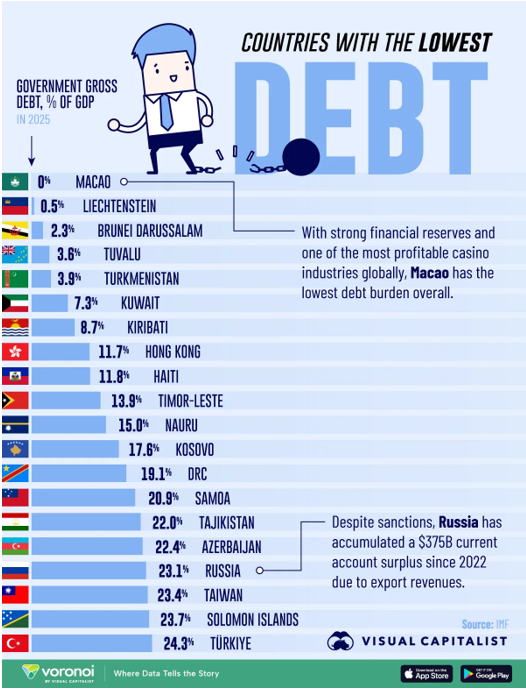
Image of the Week
Video of the Week
Nikkei Asia webinar: Our editors’ predictions for 2026
Nikkei Asia
