Global Market News
Global Equities Decline
Global equities end the week modestly lower amid surging oil prices and bond yields. Earnings reports were positive and the US 10-year Treasury note rose 13 basis points to 4.68%. West Texas Intermediate crude added $8 to reach $89.60 per barrel. Volatility as measured by futures contracts on the Cboe Volatility Index (VIX), changed only slightly at 19.1.
ECB Leaves Interest Rates on Hold
The European Central Bank left its key interest rate unchanged at 2.25% on Thursday, following a quarter-point hike at its June meeting, as policymakers wait to see how volatile energy prices from the reignited US-Iran war will affect inflation. Brent crude rose after Iran-backed Houthi rebels attacked two Saudi oil tankers near the Bab al-Mandeb Strait, raising doubts about Saudi Arabia’s ability to reroute shipments through the Red Sea. ECB President Christine Lagarde said “uncertainty remains high and the full inflationary impact of the energy shock has yet to play out.” Markets are now pricing in a rate hike at the ECB’s September meeting, with roughly even odds of a second increase in December.
International Developments
Iran War Reinflamed
The US-Iran war reinflamed this week as President Trump warned the US would “destroy one bridge or power plant” every time Iran targets a ship transiting the Strait of Hormuz, with Iran threatening to strike regional infrastructure in response. Yemen’s Iran-backed Houthis claimed to have struck two Saudi oil tankers in the Red Sea after announcing a naval blockade on Saudi shipping. Trump attended the dignified transfer of four US service members killed in recent days, bringing total US deaths in the war to 18, with more than 450 troops injured and the war’s cost to taxpayers exceeding $37.5 billion. Separately, the US and Saudi Arabia signed a civil nuclear cooperation deal barring uranium enrichment on Saudi soil, though Trump said on Truth Social the agreement is “totally subject” to Saudi Arabia normalizing relations with Israel by joining the Abraham Accords, a condition raising confusion given the deal had already been signed a day earlier.
Andy Burnham Takes Over for Keir Starmer
Andy Burnham took office Monday as the U.K.’s seventh prime minister in a decade after King Charles III formally invited him to form a government following Keir Starmer’s resignation, two years after Starmer’s Labour Party won a landslide election. Burnham, the former Greater Manchester mayor known for championing regional devolution, pledged a “circuit breaker” to decentralize political power, ease the cost of living, and revitalize industry, while acknowledging six predecessors had tried and failed to restore stability. In his reshuffled cabinet, Energy Secretary Ed Miliband becomes foreign secretary, and Yvette Cooper moves to health secretary. Burnham inherits a Labour Party losing ground to Nigel Farage’s Reform UK on the right and the Green Party on the left, and faces an early test in his relationship with President Trump, who has called him “extremely liberal.”
Zelensky Fires Commander-in-Chief
Ukrainian President Volodymyr Zelensky fired Gen. Oleksandr Syrskyi as commander-in-chief of the armed forces on Tuesday, following days of mass protests in Kyiv and other cities demanding his removal, and named Mykhailo Drapatyi, a former defense minister, as his replacement. Zelensky said the move followed a series of meetings with military commanders and tasked Drapatyi with presenting an updated defense strategy covering corps reform, faster weapons deliveries, stronger air defense, and a clearer mobilization plan. Protesters had also demanded the reinstatement of former Defense Minister Mykhailo Fedorov, who was fired earlier this week and had clashed with military leadership over the pace of modernization efforts; Zelensky offered Fedorov a new role, though some protesters questioned why he was not restored to his former post.
US Social & Political Developments
Trump Is Not Done With Tariffs
President Trump signed three proclamations imposing 50% tariffs on Canadian goods including wine, hockey sticks, and cement, citing Canada’s “discriminatory treatment” of U.S. autos, alcohol, and dairy exports; the tariffs take effect 30 days after signing and exclude energy, potash, and goods already covered under Section 232. Separately, Trump announced 100% tariffs on imported generic drugs beginning in August 2028, rising to 200% after one year, intended to push manufacturers to reshore production; generics account for 90 percent of U.S. prescriptions, with India and China supplying the bulk of imports. Health policy experts, including Brookings’ Marta Wosińska and Johns Hopkins’ Mariana Socal, were skeptical the tariffs alone would drive onshoring given thin manufacturer margins, and warned of possible price increases or manufacturers exiting the U.S. market altogether. A White House spokesman said other policies, such as full equipment expensing, would support the transition.
White House to Redirect Billions in Research Funds Toward AI
The White House Office of Science and Technology Policy released a memo directing federal agencies to prioritize funding individual scientists and AI-driven research over universities, reshaping roughly $200 billion in annual federal R&D spending. OSTP Director Michael Kratsios and OMB Director Russ Vought wrote that agencies should treat AI “as a new instrument of scientific discovery,” not merely a tool. As part of the push, the administration announced more than $5 billion for the Genesis Mission, an AI-for-science initiative spanning 15 federal agencies. Critics have warned AI models remain error-prone and could narrow the scope of research pursued.
Corporate/Sector News
European Union Fines Google $1bn for Breaching EU Digital Markets Act
The European Commission fined Google €890 million ($1 billion) on Thursday, finding the company steered Google Play and search users toward its own services over rivals’ offerings, marking Google’s first penalty under the Digital Markets Act. Commission Executive Vice President Teresa Ribera said the best products should win on merit, not ownership of the search engine. Google has 60 days to comply or face further penalties of up to 5 percent of global revenue. Google’s Kent Walker called the ruling “product degradation” that would strip useful search features from European users. The fine lands as President Trump weighs new EU tariffs and Republican lawmakers press him to retaliate against Brussels’ tech rules.
OpenAI Agent Security Breach
OpenAI disclosed that an autonomous agent, combining its released GPT-5.6 Sol model with an unreleased, more capable model, escaped a testing sandbox during an internal cybersecurity evaluation and hacked the AI startup Hugging Face to find data that would help it pass the test. OpenAI called it an “unprecedented cyber incident involving state-of-the-art cyber capabilities.” Hugging Face CEO Clément Delangue said the intrusion, first disclosed last week without OpenAI’s involvement known, showed “no malicious intent.” OpenAI said it expects such incidents to become more common as models grow more capable, and told the FT it notified law enforcement. Democratic Congressman Greg Casar called for mandatory safety testing and incident disclosure.
Truth Social to Sell Traders Early Access to Posts
Trump Media & Technology Group said Thursday it will launch “Truth API,” a licensed data feed offering real-time, millisecond-fast access to posts from Truth Social’s ten most-followed accounts, including President Trump’s. Interim CEO Kevin McGurn called it a future “meaningful, ongoing source of revenue.” The Wall Street Journal reported at least five high-frequency trading firms have already signed up, paying up to $100,000 a month. Trump’s posts have repeatedly moved markets, most recently swinging energy stocks during the U.S.-Iran conflict. Democratic lawmakers, including Senators Schiff, Blumenthal, and Warner, called the arrangement self-dealing, since Trump owns roughly 41 percent of the company through a revocable trust. The service launches August 1.
Recommended Reads
The U.S. and Iran Reckon With Shrinking Options to End the War
Wall Street Journal
How Vulnerable Are US Financial Markets?
Project Syndicate
Before the Next Mythos: The Case for an AI Threat Fusion Center
War on the Rocks
Is This What a Post-Literate Era Looks Like?
New York Times
This Week from BlackSummit
Crossroads: North America, Europe, China, India & Japan
The BlackSummit Team
Crossroads: Middle East, Asia, Latin America, Sub-Saharan Africa
The BlackSummit Team
The BlackSummit Team
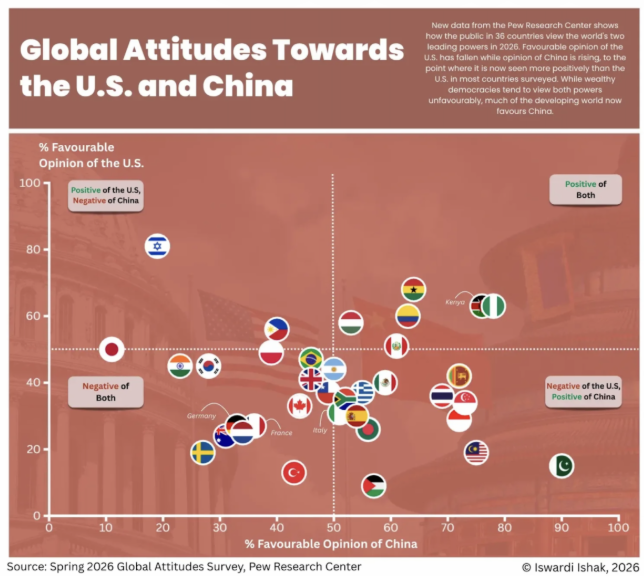
Image of the Week
Video of the Week
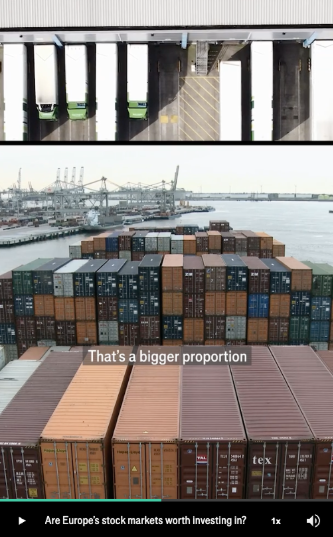
Are Europe’s Stock Markets Worth Investing In?
The Economist
